
Agentic AI is rapidly becoming a primary driver for enterprise efficiency. Unlike earlier generations of AI that simply answered questions, autonomous AI agents can execute multi-step workflows, optimize supply chains, and automate complex compliance protocols.
While AI agents substantially improve efficiency, they also execute actions on behalf of the business, making the stakes incredibly high. An inaccurate agent could easily trigger regulatory violations or expose critical security risks. These compounding business impacts highlight a critical reality: AI agents are only as safe as their underlying context. To function accurately, they require seamless, high-fidelity access to an organization’s proprietary data, whether that data is structured or unstructured, processed in batch, or streamed in real-time.
Delivering this level of data integration requires a purpose-built infrastructure. VMware Tanzu, on VMware Cloud Foundation (VCF) powered by VMware vSAN, provides a uniquely differentiated solution designed to solve enterprise data challenges holistically on-premises. Instead of being tied entirely to the public cloud or relying on piecemeal partnerships to bridge separate data and storage layers, this platform delivers a completely unified stack. For instance, when executing a complex natural language processing (NLP) query, the system seamlessly connects the AI agent, the foundational model, enterprise data, and high-performance vSAN storage in a single, on-premises workflow, delivering a more performant end-to-end agentic AI architecture.
How legacy and cloud architectures struggle to keep up with AI
Enterprises are eager to deploy autonomous agents, but they quickly hit a physical limitation in their IT infrastructure in the form of data gravity. When an organization’s proprietary data is massive and siloed, IT leaders face a lose-lose architectural choice.
If they leave the data in legacy on-premises systems and attempt to connect it to a public cloud AI service over a network, they introduce severe latency that breaks real-time, autonomous execution. Conversely, if they attempt to move that petabyte-scale data to the cloud where the AI resides, they incur exorbitant data egress fees.
Also, for highly regulated industries like finance and healthcare, moving sensitive data outside the corporate firewall is often a non-starter due to compliance risks. You cannot run secure, real-time autonomous AI when you are forced to choose between high latency or prohibitive costs and compliance violations.
Unified storage for complex AI data workloads
Agentic AI does not rely on a single data format. It requires a mix of storage protocols to function efficiently. VMware vSAN addresses this by offering a unified storage layer, and Broadcom plans to continue expanding vSAN’s capabilities in the future to handle the complete AI data lifecycle:
- File Storage: For managing and storing the actual AI model weights and binaries.
- Block Storage: For delivering the high-speed performance required by vector databases to process embeddings.
- S3 Object Storage: For housing the massive data lakes of unstructured documents, logs, and media that act as the source material for AI models. *vSAN native S3 object storage is in Tech Preview with VCF 9.1.1.
AI data architecture in action: Bringing compute to the AI
By combining VMware Tanzu Greenplum (part of VMware Tanzu Data Intelligence) with vSAN, organizations can address the latency problem by bringing the AI compute directly to the storage layer. Here is how that data lifecycle flows in a production environment:
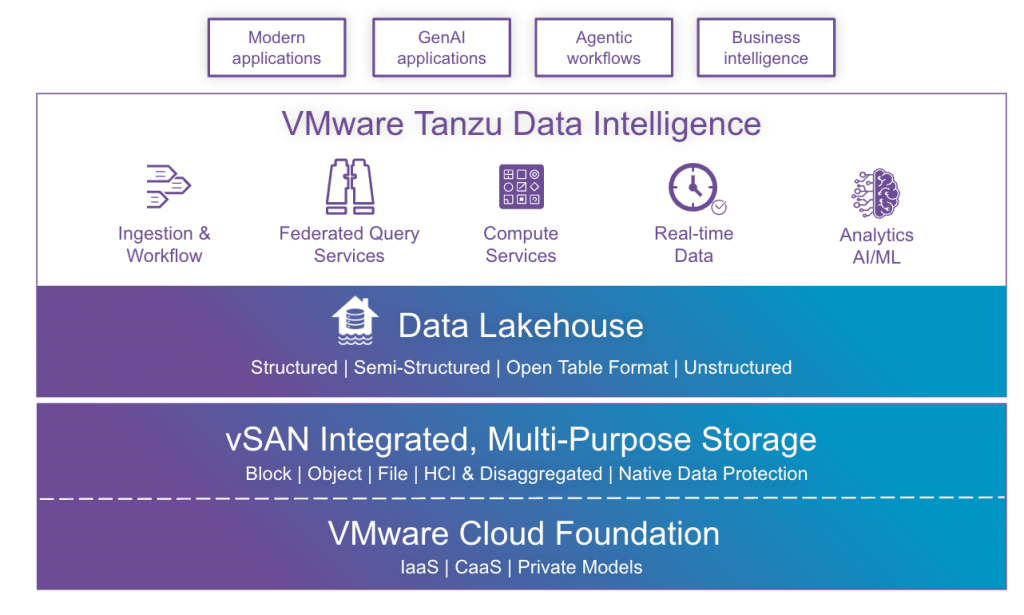
Fig 1. Tanzu Data Intelligence with vSAN
We can enable massive volumes of raw, unstructured enterprise data, such as legal contracts, customer support logs, and historical records to land securely in vSAN S3 object storage. Next, Tanzu Greenplum processes and vectorizes this raw text. These highly structured vector embeddings are then stored on vSAN block storage, which delivers the massive IOPS required for instant similarity searches. Finally, your agentic AI models, housed on vSAN file shares, can query both the raw context and the vector index simultaneously. The result is a closed-loop, high-performance AI engine operating entirely within the enterprise firewall.
From hot to warm: Seamless data layer querying
For real-time operational needs, “hot” data (typically less than a year old) is routed to Tanzu Greenplum compute segments running in virtual machines on low-latency vSAN block storage using high-performance NVMe-based TLC devices. This layer is optimized for high-load data writing, active datasets, and frequent, demanding queries.
As information ages into “warm” data (ranging from 1 to 10 years old), the platform automatically transitions it to QLC-based, read-intensive storage tiers with global deduplication running S3-compatible object stores and open Apache Iceberg formats to reduce costs. This architecture ensures that historical archives, online compliance data, and ad-hoc workloads remain fully accessible. By unifying these high-performance compute and extensible lake storage layers under one engine, organizations can run complex analytics that seamlessly cross-analyze real-time operational workloads and a decade of historical records in a single query.
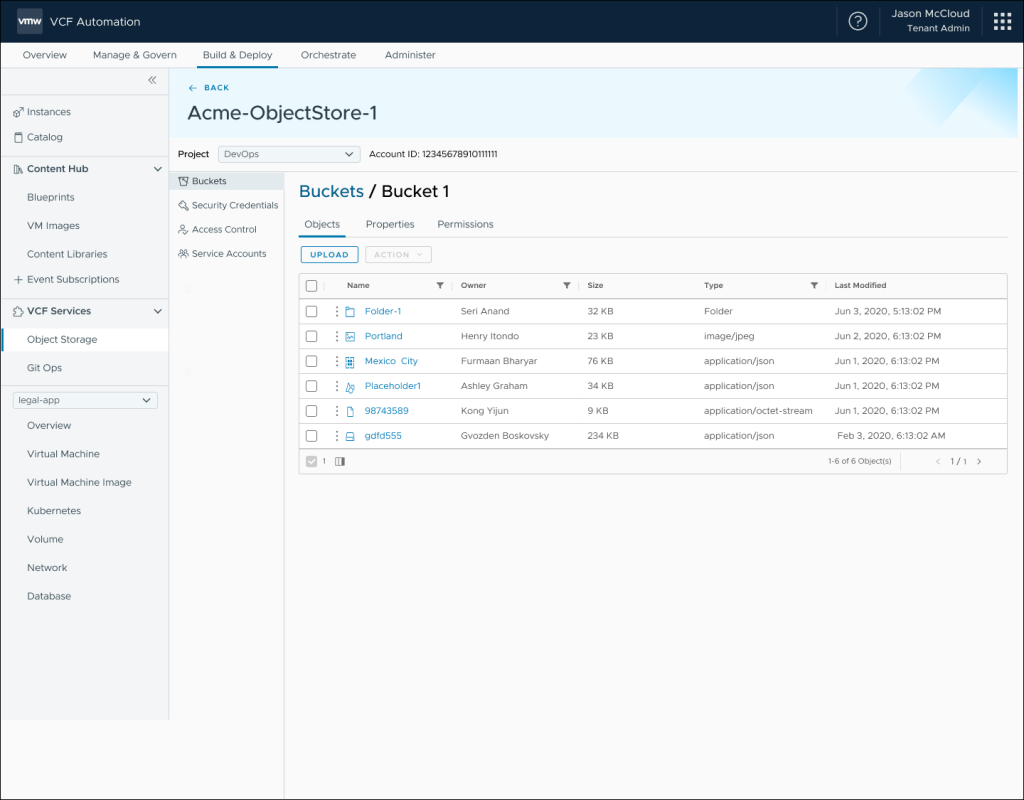
Fig 2. vSAN S3 Object Storage
Use cases: Agentic AI in production
What does this infrastructure look like when applied to actual business operations?
- Autonomous Compliance Auditing: In the financial sector, an AI agent running locally on Tanzu can autonomously query a decade of unstructured contracts stored in vSAN S3, cross-reference those documents against live transaction streams, and flag regulatory violations in milliseconds. Because the stack runs on-premises via VCF, the customer avoids the compliance risks associated with public cloud data processing.
- Supply Chain Resilience: A supply chain agent can instantly analyze incoming, unstructured vendor emails and cross-reference them with structured inventory levels stored on vSAN. If a supplier reports a delay, the agent can autonomously query historical logistics data and immediately issue a reroute order to a backup supplier, eliminating hours of manual analysis.
Why vSAN is the optimal layer for Tanzu Data Intelligence
Running Tanzu Data Intelligence on vSAN offers several distinct advantages over assembling disparate infrastructure or relying solely on public cloud providers.
- High Performance and Low Latency: AI data ingestion and vector retrieval require massive throughput. vSAN delivers up to 300,000 IOPS per node during peak conditions, so that AI agents don’t have to wait on disk latency when making real-time decisions. vSAN’s block storage delivered 20% higher IOPS with similar sub-millisecond latency in application-level testing than an all-flash, external storage array in recent testing.
- Lower Total Cost of Ownership: By utilizing standard server economics and integrating tightly with the full VCF infrastructure stack, vSAN delivers up to 39% lower storage total cost of ownership compared to traditional, siloed storage arrays.
- Data Sovereignty and Security: Sending proprietary data to a public cloud introduces significant risk. This architecture keeps all data on-premises behind the corporate firewall. Furthermore, vSAN provides built-in cyber resilience through immutable snapshots, data-at-rest encryption, and replication for fast cyber recovery.
- Efficient Dev/Test Workflows: Testing Agentic AI requires production-grade data. vSAN native snapshots allow data teams to efficiently clone massive datasets for development and testing without duplicating storage capacity or impacting production performance.
- Operational Consistency and Native UX: The integration provides a native VCF user experience with built-in installation and management workflows. IT teams benefit from a single infrastructure stack across on-premises, edge, and sovereign clouds, backed by single-vendor support from end to end.
- Software-Defined Agility: As a purely software-defined storage platform, vSAN delivers rich data services across all workloads, supporting multi-tenant environments and enabling end-user self-service access for developer teams.
Next steps in your AI data infrastructure
To achieve the operational efficiency promised by agentic AI, enterprises must move beyond fragmented data architectures. By combining the developer tools and AI services of Tanzu Data Intelligence with the unified, high-performance storage of vSAN, organizations can build a secure, cost-effective, and sovereign foundation for their most critical AI workloads.
To learn more about how VMware Tanzu Data Intelligence and vSAN can accelerate your enterprise AI initiatives, feel free to contact us and schedule a technical deep dive.
We recently showcased our latest developments at VMware Explore 2026 Las Vegas. Read about the newest Tanzu Greenplum updates and see how Tanzu Platform is evolving to become the de facto Agent Platform for VMware Private AI Cloud.