
Traditional infrastructure was never designed for edge scale. Managing hundreds to thousands of distributed sites with fragmented stacks, siloed tools, and manual processes creates operational risk, inconsistent security, and costly site-by-site management.
For many organizations, this means logging into hundreds of sites to apply updates, troubleshooting inconsistent configurations, and relying on on-site IT slowing deployments and increasing risk. As AI workloads and real-time applications move closer to where data is generated, these challenges become even more pronounced.
VMware Cloud Foundation Edge (VCF Edge) changes this model. It delivers a unified, distributed private cloud platform to run virtual machines, Kubernetes based applications, and AI workloads with a consistent operating model across all locations eliminating the need for separate edge infrastructure.
VCF Edge 9.1 advances this vision with autonomous edge operations automating deployment, lifecycle operations at scale, and policy-driven security even in disconnected or air-gapped environments.
Autonomous Edge Operations
At scale, the challenge is not deploying a single site, it’s operating hundreds or thousands of sites consistently.
VCF Edge replaces siloed edge infrastructure with a unified platform for VMs, containers, and AI standardizing operations across distributed environments and supporting flexible edge topologies from single-node to multi-cluster. Each site runs locally for resilience, while centralized management enforces policy, lifecycle, and governance across the entire fleet.
The result is lower operational cost, faster deployment, and the ability to scale edge infrastructure without added complexity or risk.
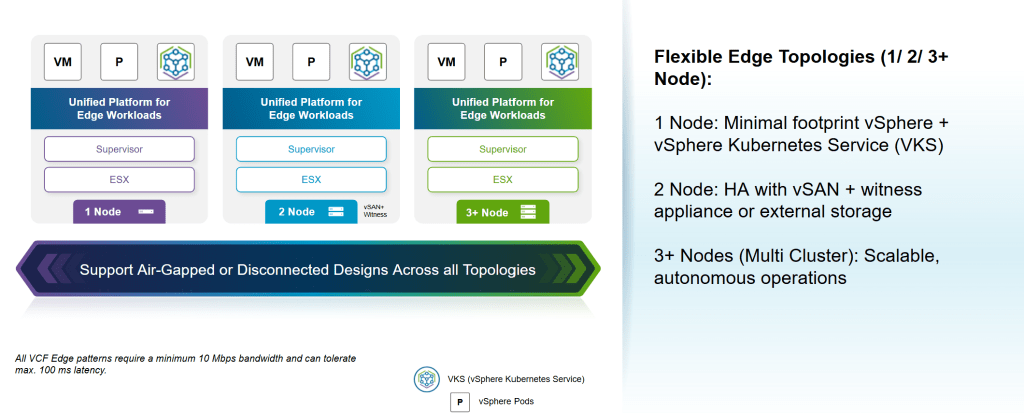
Image: Flexible VCF Edge Deployment Topologies for Distributed Environments
Accelerate Deployment with Zero-Touch Provisioning
Traditional edge deployments require manual setup, on-site IT, and weeks of coordination making large-scale rollouts slow and expensive. VCF Edge removes this friction with Zero-Touch Provisioning (ZTP). When a server powers on, it securely boots, connects to centralized management, and pulls its full desired state including OS image, cluster configuration, and networking automating deployment end to end. The Day 0 Activation Script ensures every site is production ready with platform services and GitOps integration.
The result is faster deployment, consistent configurations, and the ability to scale edge infrastructure in hours without manual setup or on-site IT significantly reducing operational overhead.
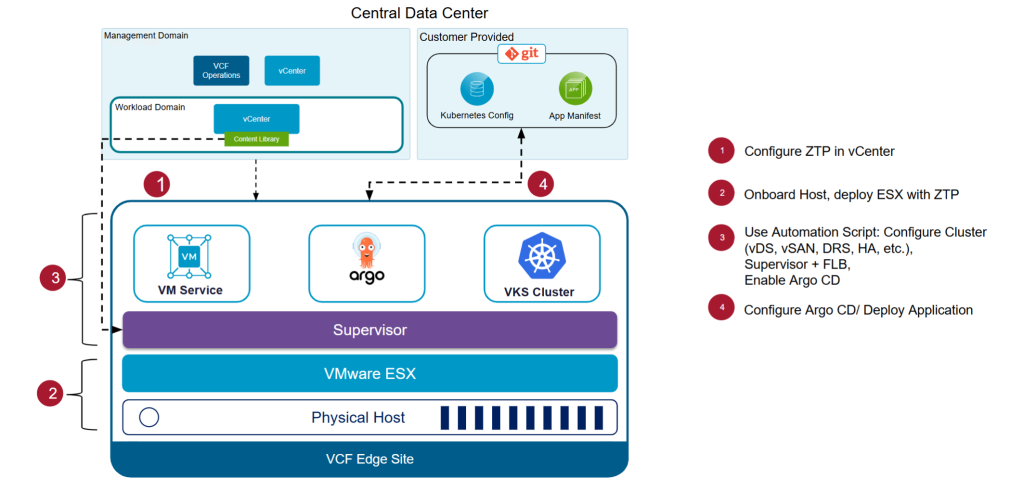
Image: Zero-Touch Provisioning → Day 0 Activation → Continuous Application Delivery
Optimize Performance and Cost with Enhanced NVMe Memory Tiering
At the edge, scaling infrastructure often means adding more servers driving up cost, space, and power requirements. VCF Edge introduces enhancements to NVMe Memory Tiering, extending system memory using high-performance NVMe devices to increase capacity without adding DRAM. The result is higher workload density, better utilization of existing hardware, and the ability to delay or avoid costly infrastructure upgrades.
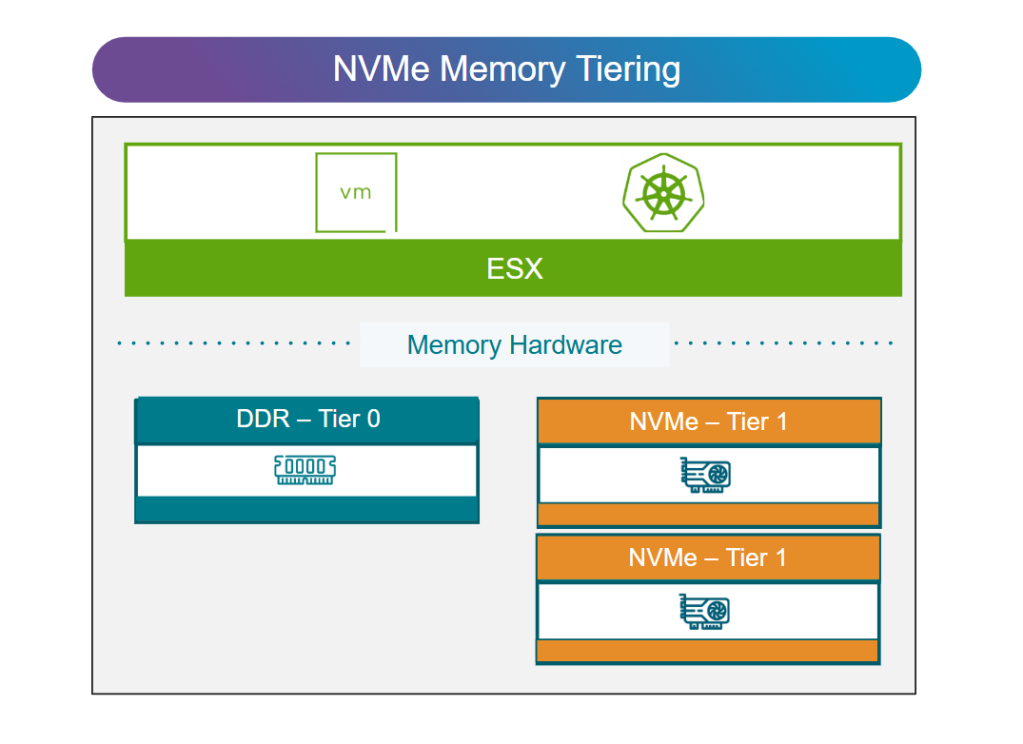
Image: NVMe Memory Tiering for Edge Infrastructure (Extend Memory Without Adding DRAM)
A Unified, AI-Ready Platform for Edge Workloads
Managing infrastructure, Kubernetes, and AI across distributed environments introduces significant complexity. VCF Edge simplifies this with a unified platform for VMs, Kubernetes, and AI eliminating the need to deploy and manage separate stacks.
Production-Ready Kubernetes at the Edge
VCF Edge delivers a production-ready Kubernetes platform with extended lifecycle support, flexible OS options, and advanced networking. The result is simplified operations, faster application deployment, and consistent environments across every site.
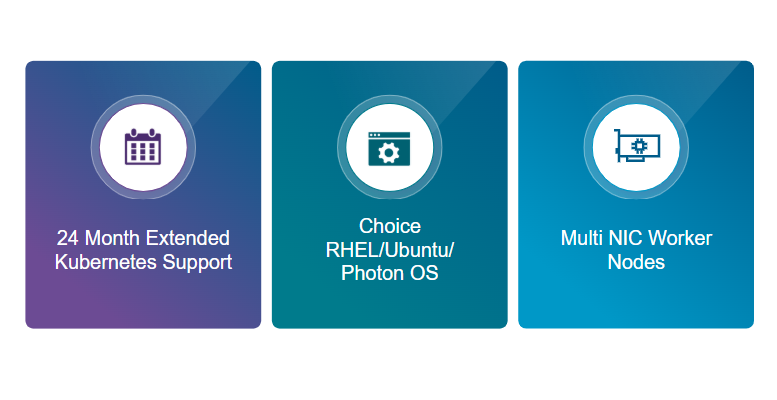
Image: Extended support, OS flexibility, and advanced networking for edge deployments
Simplicity Without Kubernetes Complexity
Not every workload requires full Kubernetes. VCF Edge enables containers to run alongside virtual machines using vSphere Pods. This delivers faster deployment, lower operational overhead, and simplified container adoption without Kubernetes expertise.
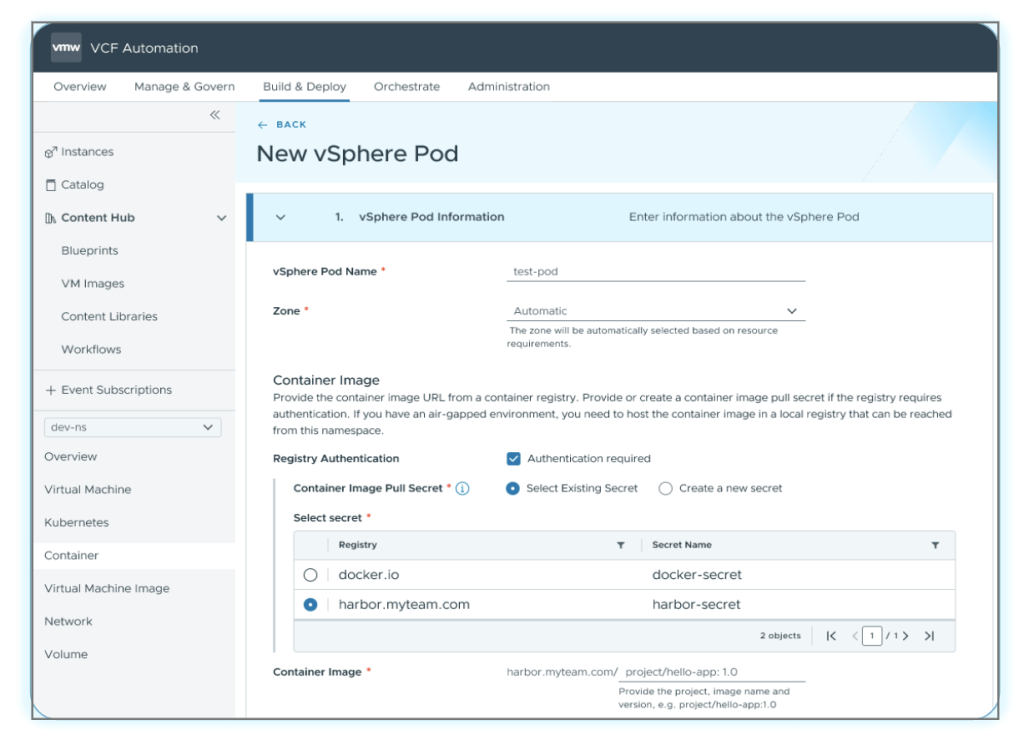
Image: Run Containers with vSphere Pods (CaaS Without Kubernetes Complexity)
AI at the Edge Without Infrastructure Tradeoffs
GPU availability, cost, and power constraints often limit where AI can be deployed. VCF Edge enables AI inference to run alongside existing workloads using GPUs or CPU-based inference (via llama.cpp). Organizations can deploy AI closer to where data is generated without requiring separate infrastructure stacks. The result is lower AI infrastructure cost, faster deployment of AI use cases, and the ability to run AI across more edge locations without requiring GPU infrastructure at every site.
Accelerate AI Performance with GPU and Accelerator Support
Support high-performance accelerators to run demanding AI inference workloads at the edge while maximizing GPU utilization across sites.
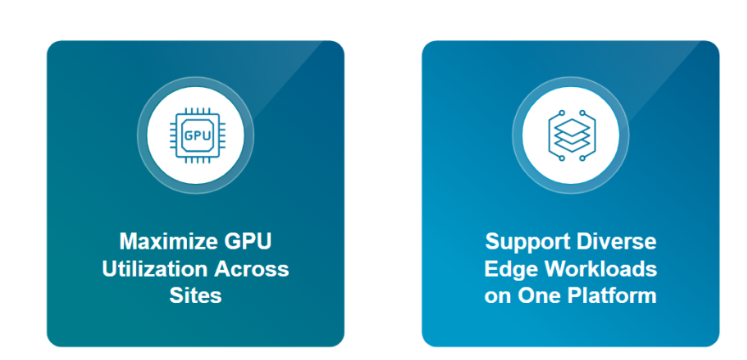
Image: GPU and Accelerator Support for AI Workloads at the Edge
Expand AI Everywhere with CPU-Based Inference
VCF Edge enables AI inference on standard CPU infrastructure using llama.cpp, reducing reliance on GPUs and enabling AI to run in constrained or remote edge environments where GPU deployment is not practical.
Image: CPU-Based AI Inference for Edge Environments (llama.cpp)
Continuous Delivery Across Distributed Edge Sites
Consistency at the edge is not a one-time deployment problem, it is an ongoing operational challenge.
Centralized Image Distribution (Pull-Based Model)
VCF Edge secures operational continuity through a pull-based Centralized Image Distribution model that utilizes the Content Library to synchronize images across the entire fleet. This architecture is specifically engineered to enable reliable operations in low-connectivity, disconnected, or fully air-gapped environments by allowing each site to host and manage its own state locally. By eliminating the need for a constant management link, this model minimizes bandwidth consumption and ensures that every edge site remains a resilient, autonomous unit capable of maintaining consistent deployments regardless of external connectivity.
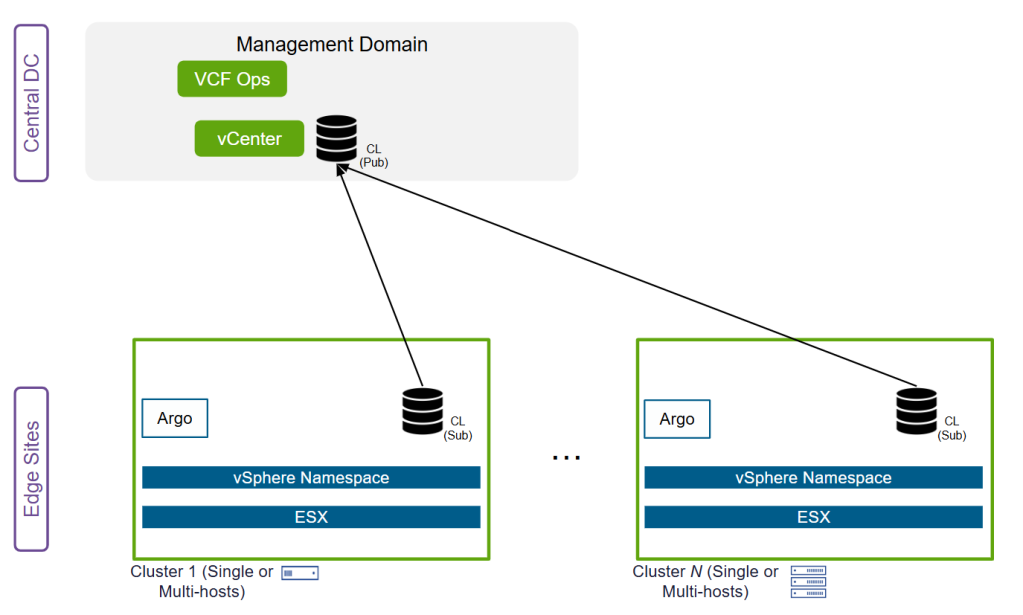
Centralized Image Distribution Across Distributed Edge Environments (Pull-Based Model)
GitOps-Based Automation for Continuous Delivery
Once infrastructure is deployed, maintaining consistency across distributed edge sites requires continuous delivery and automated configuration management.
VCF Edge enables GitOps-based automation through integration with tools such as Argo CD, allowing organizations to define infrastructure and application configurations in Git and automatically deploy updates across all edge sites. Instead of managing changes site by site, configurations are defined once and applied across the entire fleet.
The result is faster application delivery, automated updates, continuous drift detection and remediation, and consistent environments across all edge locations.
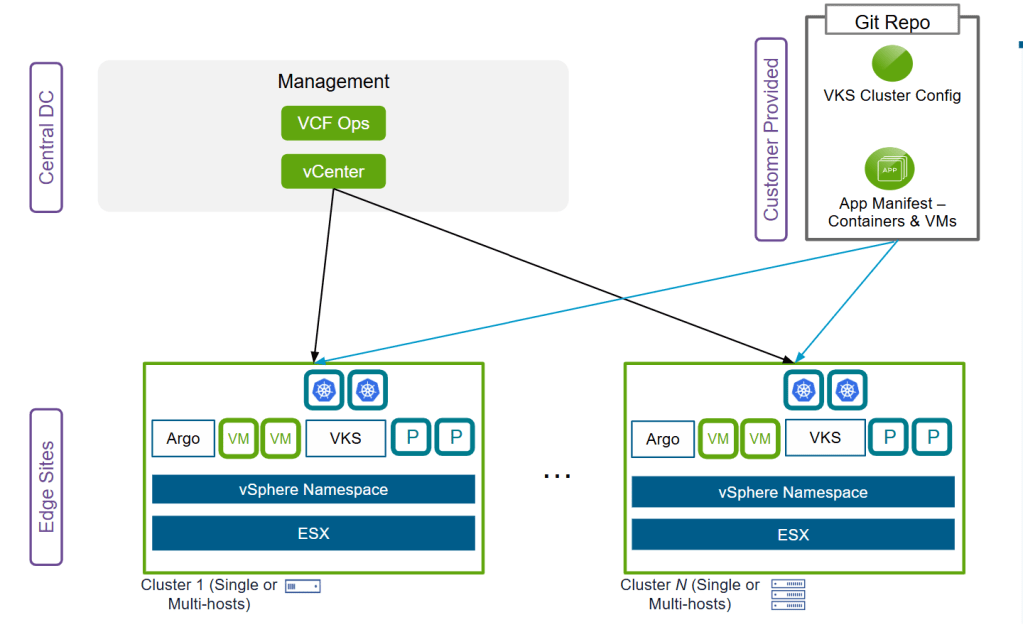
Image: GitOps-Based Desired State Management Across Distributed Edge Environments (Argo CD)
Real-Time Fleet Observability
Without centralized visibility, troubleshooting edge environments is slow and reactive. VCF Edge provides real-time observability across the fleet, enabling proactive monitoring and faster issue resolution. The result is reduced downtime and more reliable operations.
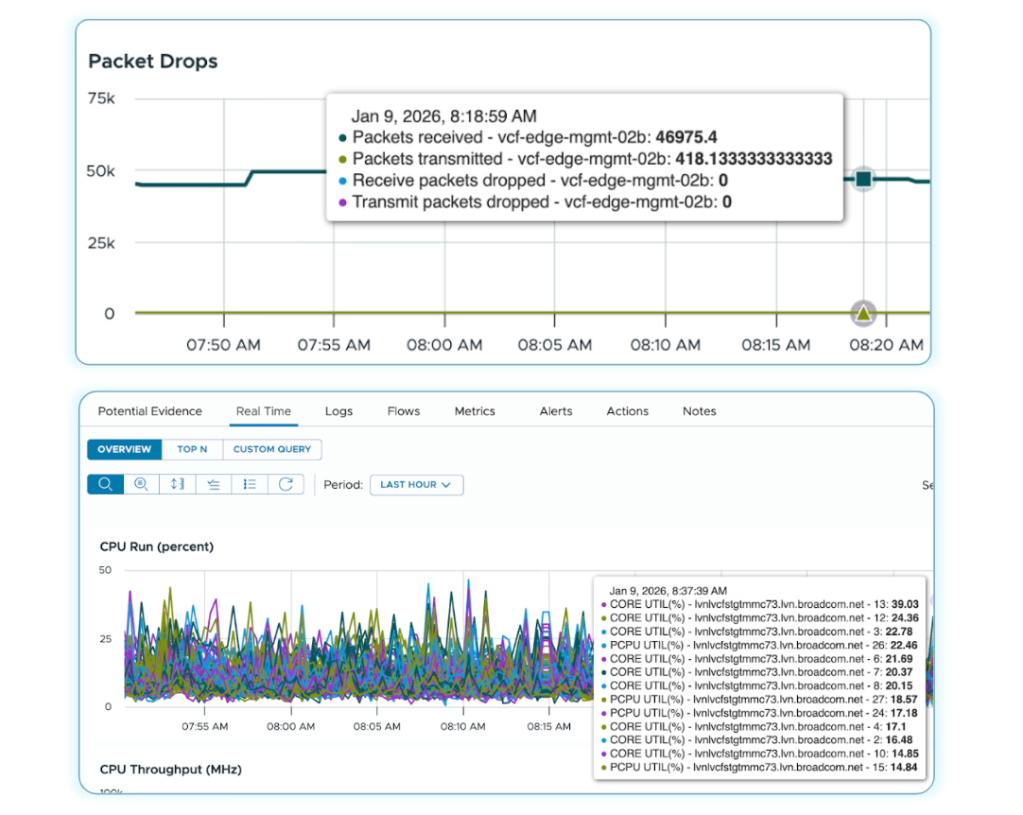
Image: Real-Time Observability and Monitoring for Distributed Edge Environments
Secure and Resilient Edge
Security at the edge is challenging, with limited local IT and distributed risk.
Non-Disruptive Live Patching
VCF Edge enables ESX Live Patching for TPM-enabled hosts, allowing up to 80%(1) of security patches to be applied without reboots. Updates are executed remotely with no maintenance windows, keeping workloads continuously available while maintaining security at scale.
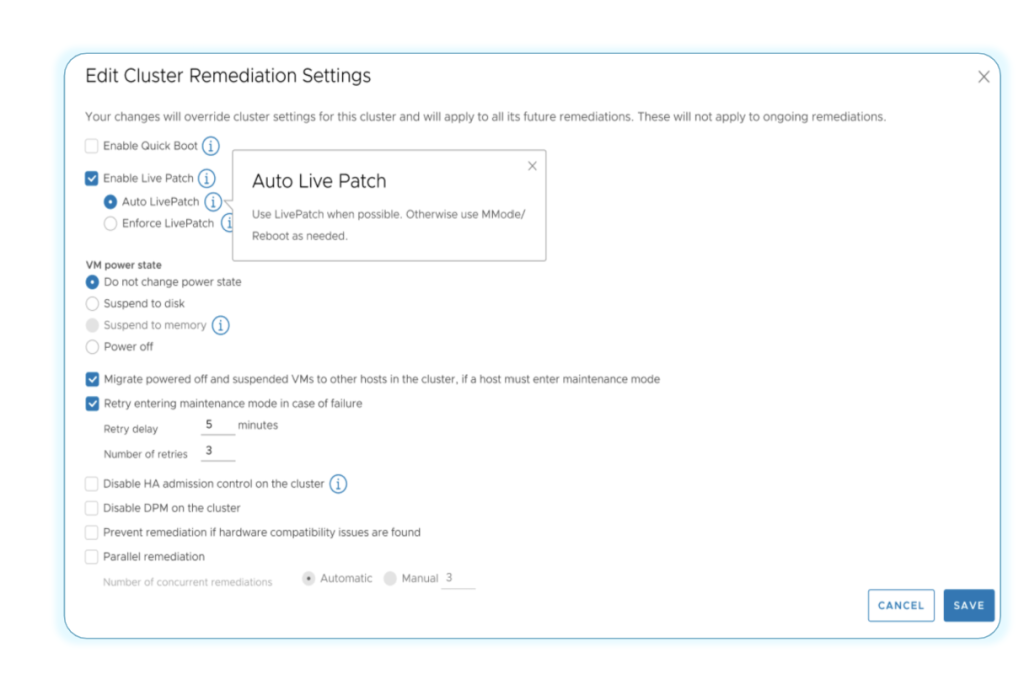
Image: Non-Disruptive ESX Live Patching for Edge Infrastructure (TPM-Enabled Hosts)
Optimized for Edge Scale. Built for Real-World Operations.
VCF Edge replaces fragmented edge architectures with a unified platform built for distributed scale. It aligns licensing, deployment, and operations to the realities of edge environments optimizing for resource constrained footprints while eliminating manual, site-by-site management.
By standardizing infrastructure, applications, and AI on a consistent operating model, VCF Edge enables efficient, repeatable operations across every location. The result is an autonomous, scalable, and AI-ready platform that allows enterprises to operate thousands of edge sites with the simplicity of one platform.
Autonomous. Scalable. AI-Ready. Operate thousands of edge sites as one platform.
Learn More
Explore how VCF Edge 9.1 can help your organization deliver a scalable, autonomous edge platform:
- VCF Edge website
- VCF Edge Solution Brief
- IDC Whitepaper: Modernizing the Distributed Frontier with VMware Cloud Foundation Edge
- Virtually Speaking Podcast: VCF Edge 9.1: Scaling Secure Edge Deployments
- VCF Edge Design Guide
- Broadcom Compatibility Guide
- VCF 9.1 Announcement blog
Sources:
1 – Based on internal Broadcom test results, 2026, subject to change.
Discover more from VMware Cloud Foundation (VCF) Blog
Subscribe to get the latest posts sent to your email.