
Infrastructure leaders today are navigating a complex landscape where the cost of hardware and the demands of modern workloads are in constant friction. DRAM price volatility and rapid data growth often erode the return on investment for even the most well-planned modernization initiatives. At the same time, the “Maintenance Tax,” the cumulative burden of manual troubleshooting and long patching windows, stalls innovation by keeping IT teams in a reactive mode.
To move forward, infrastructure must do more than simply host applications; it must be technically agile and economically optimized.
Today, we are excited to announce the upcoming release of VMware vSphere Foundation 9.1. This release is designed to modernize infrastructure economics by reducing operational downtime and unlocking superior performance for the modern data center. By removing sequential bottlenecks and maximizing hardware ROI, VMware vSphere Foundation 9.1 helps ensure your workloads run faster and scale with greater efficiency.
What’s New in VMware vSphere Foundation 9.1?
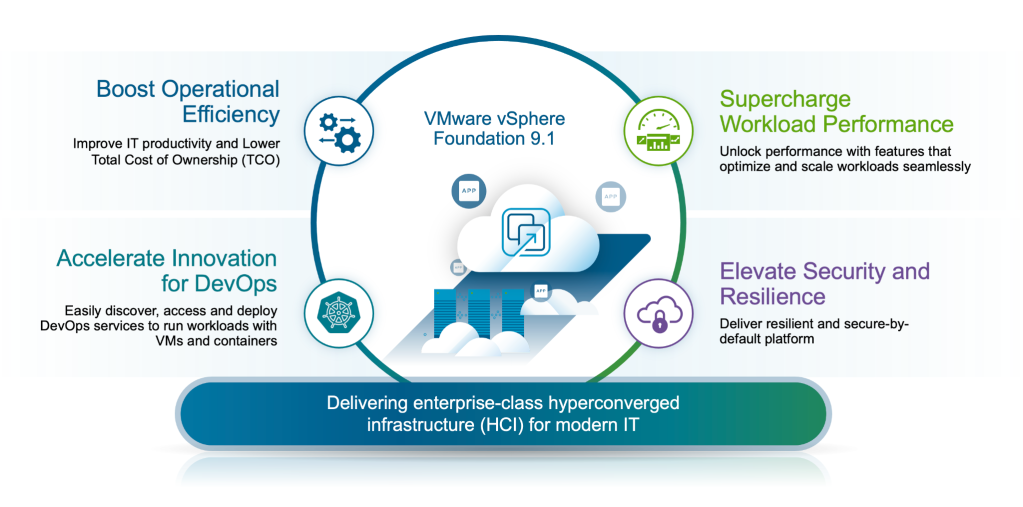
Figure 1: VMware vSphere Foundation 9.1 modernizes infrastructure economics by slashing operational downtime and delivering superior workload performance.
Boost Operational Efficiency and Lower TCO
In the modern data center, time and memory are the most expensive commodities. Fragmented tools and manual processes often delay hardware time to production, while traditional management updates can impact service availability. VMware vSphere Foundation 9.1 addresses these challenges by delivering a streamlined platform that lowers total cost of ownership and improves visibility through high-fidelity observability.
This level of precision replaces legacy five-minute polling averages with high-velocity data streams. By capturing transient performance spikes that were previously invisible, administrators can ensure mission-critical stability and accelerate resolution times. Platform updates, delivered via VCF Operations, allow IT teams to move beyond basic monitoring into the realm of proactive remediation. This release focuses on automated, desired-state management to eliminate configuration drift, while new zero-touch discovery capabilities ensure that infrastructure can scale as fast as the business demands.
Top Efficiency Features
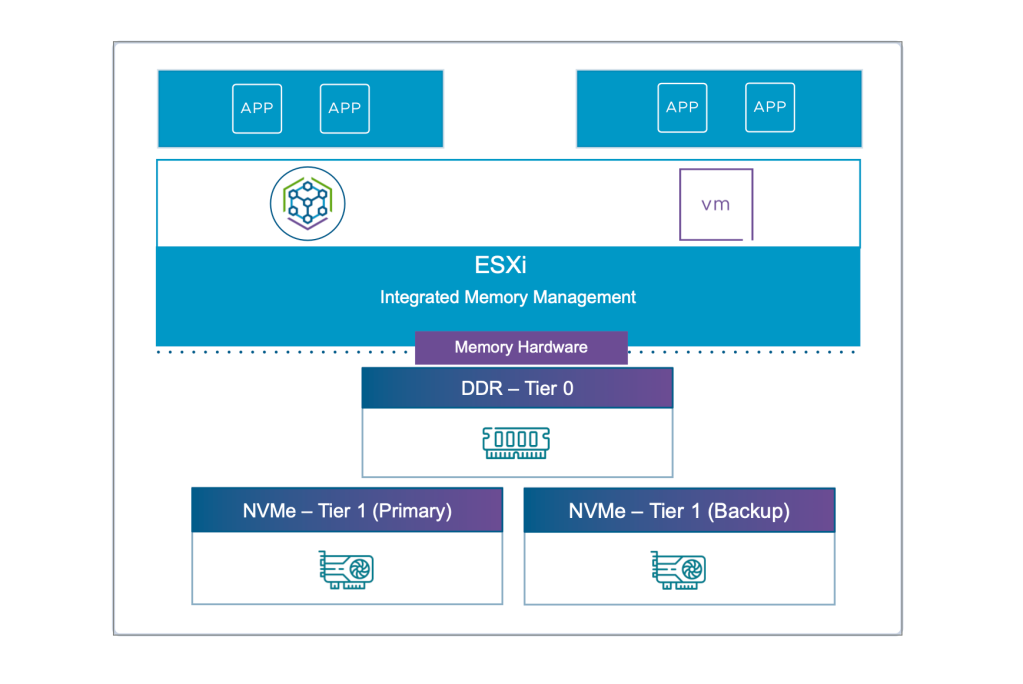
Figure 2: Modernize infrastructure economics by utilizing high-performance NVMe as a second tier of memory.
Enhanced NVMe Memory Tiering
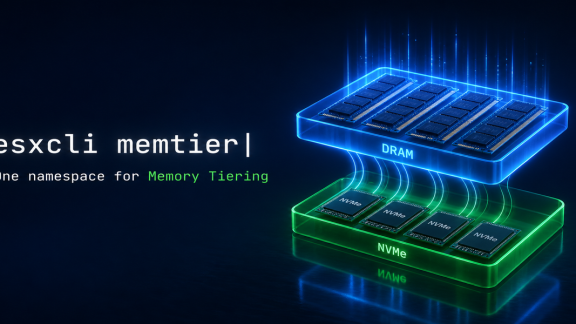
This feature modernizes infrastructure economics by utilizing high-performance NVMe as a second tier of memory. It allows organizations to expand effective memory capacity while significantly lowering the hardware acquisition costs associated with high-density DRAM.
- Modernized Economics: Achieve significantly lower server TCO by leveraging high-performance NVMe devices for memory expansion.
- Intelligent Offloading: Defer hardware purchases through memory management that offloads 20 to 25 percent of memory accesses.
- Performance Gains: Achieve improved database performance compared to earlier releases via zero-downtime activation.
- Workload Density: Increase the number of virtual machines per host without compromising application responsiveness.
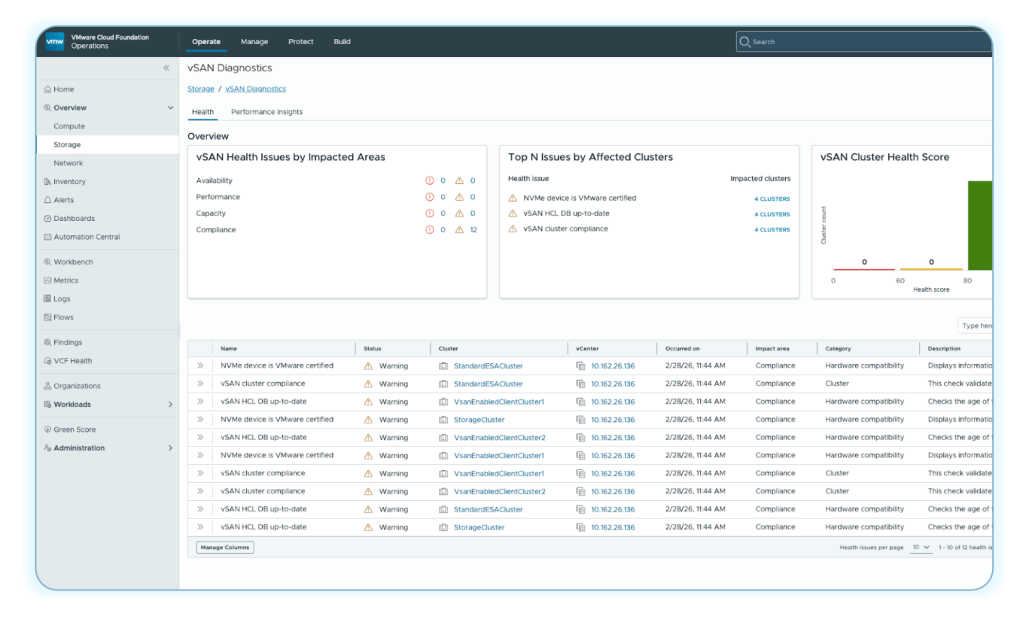
Figure 3: Surface underlying root causes and guided remediation advice natively within the primary operations console.
Proactive Diagnostic Insights
Administrators can now surface underlying vSAN root causes and guided remediation advice natively within the primary operations console. This capability streamlines the troubleshooting workflow, removing the need for disconnected tools and reducing the manual effort required to resolve issues.
- Streamlined Troubleshooting: Achieve a marked reduction in troubleshooting effort through proactive diagnostic insights and console consolidation.
- Native Remediation: Access remediation advice directly within the workflow to resolve issues faster.
- Instant Metrics: View vSAN latency metrics immediately without the delay of traditional scheduled diagnostic tests.
- Lower Complexity: Surface root causes directly where you already manage your fleet.
Additional Efficiency Highlights:
- Quick Patching for vCenter: Slash maintenance windows to under five minutes by transitioning to targeted updates.
- vSphere Elastic Provisioning: Scale infrastructure instantly with automated, zero-touch host discovery and imaging.
- vSphere Configuration Profiles: Eliminate configuration drift through automated, full-stack setup and management.
Supercharge Workload Performance at Scale
VMware vSphere Foundation 9.1 is engineered to extract maximum value from your latest hardware investments. As processor core counts rise, traditional scheduling methods can lead to performance silos and inefficient resource allocation. By optimizing compute density and migration speed, this release delivers predictable, high-velocity performance for both business-critical and modern workloads.
The introduction of vSphere Topology-aware Scheduling is a breakthrough for high-density environments, utilizing chip-aware logic to optimize NUMA placement and reduce page-migration costs. This ensures that even the most resource-intensive applications maintain peak responsiveness. Complementing this is Parallel Processing of DRS vMotion, which removes sequential bottlenecks during cluster balancing. By allowing multiple migrations to occur simultaneously, the platform delivers high-velocity workload mobility that keeps pace with the demands of the modern enterprise.
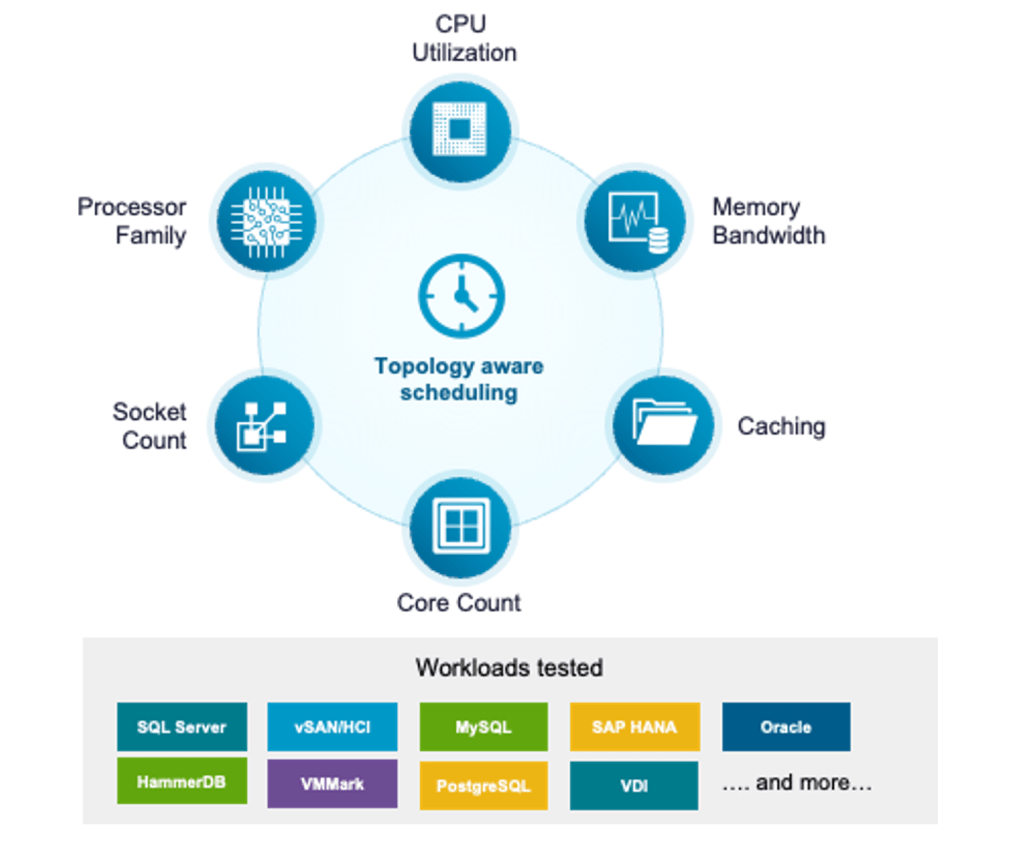
Figure 4: Maximize high-density processor performance through chip-aware scheduling.
vSphere Topology-Aware Scheduling
This scheduling optimization represents a breakthrough for high-density processors by factoring page-migration costs into the placement algorithm. It maximizes performance for demanding applications on both AMD and Intel platforms by optimizing placement logic.
- Major Performance Gains: Achieve significant performance gains on four-socket systems through chip-aware scheduling optimization.
- Specialized Logic: Deliver optimized results by utilizing specialized vSAN-aware placement logic.
- Resource Fairness: Eliminate node overpacking and unnecessary migrations by adopting a multi-resource goodness model.
- Improved Responsiveness: Factor architectural costs into the algorithm to improve results for applications on SNC-enabled systems.
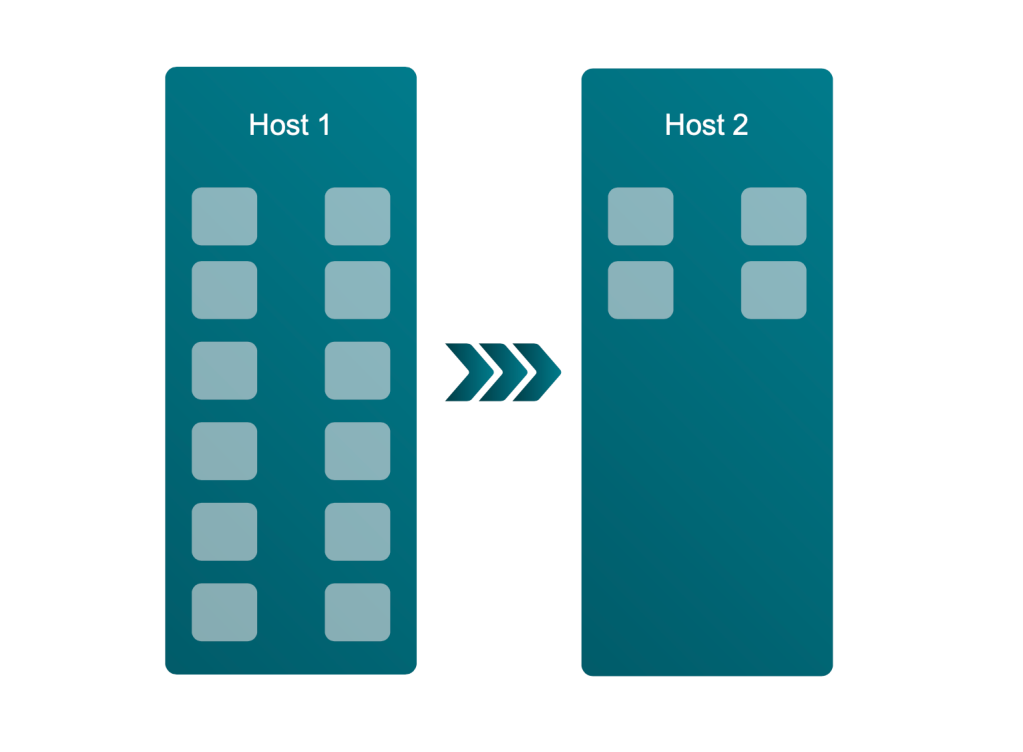
Figure 5: Accelerate host evacuations and cluster balancing by eliminating sequential migration bottlenecks.
Parallel Processing of DRS vMotion
By removing legacy sequential migration bottlenecks, this feature enables the platform to balance workloads with minimal impact on production. It standardizes system-wide performance by ensuring that clusters can rebalance significantly faster during peak I/O periods.
- Faster Migration: Achieve significantly faster migration times by eliminating sequential batching bottlenecks.
- Resource Utilization: Maximize hardware ROI by reducing the overall time required for DRS to balance workloads.
- Reduced Latency: Eliminate performance bottlenecks associated with the batching of virtual machines during lifecycle events.
- High-Velocity Mobility: Ensure workload movement keeps pace with modern enterprise demands.
Additional Performance Highlights:
- Encrypted vMotion with Intel QAT: Protect data in transit with hardware acceleration that consumes up to 70% less source CPU.
- Extended vSAN Data Reduction: Deliver up to 39% lower storage TCO through performance-optimized deduplication and compression.
- vSAN ESA Sharing: Maximize hardware ROI by sharing high-performance storage across mixed-storage environments.
Elevate Security, Resilience, and Compliance
Resilience in VMware vSphere Foundation 9.1 is built-in and non-disruptive, allowing organizations to maintain a hardened security posture without impacting production uptime. VVF 9.1 addresses the trade-off between security and availability by delivering a security-by-default posture that protects the modern hardware fleet without adding operational friction.
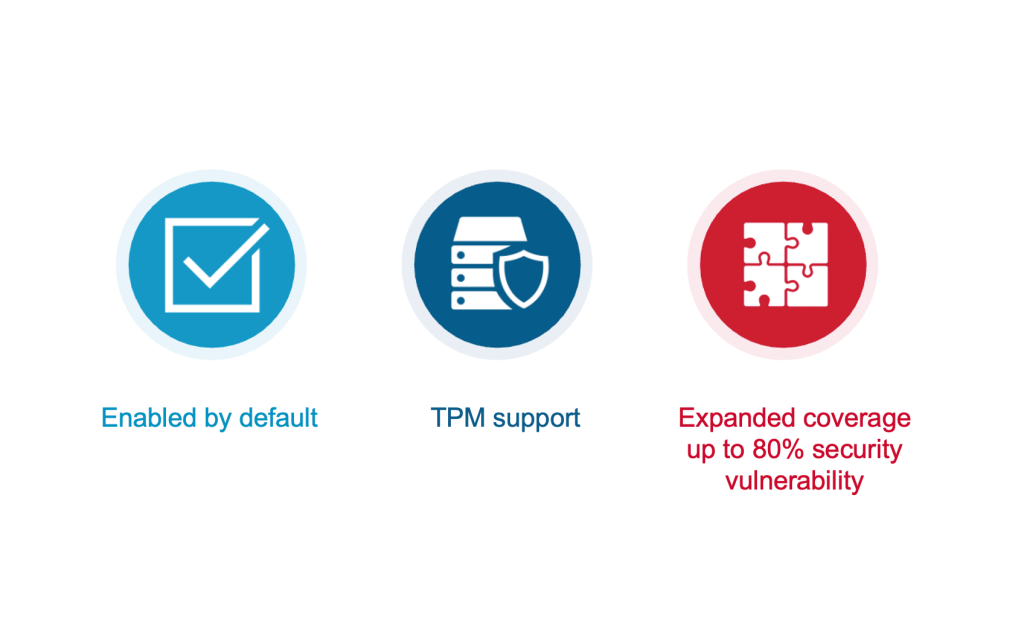
Figure 6: Apply critical security updates without host evacuations or planned downtime.
Live Patching for TPM-Enabled Hosts
This security enhancement allows organizations to apply critical security updates without host evacuations or planned downtime. It ensures that modern hardware is always protected against evolving vulnerabilities while maintaining continuous compliance.
- Zero-Downtime Updates: Enable zero-downtime security updates for up to 80% of patches on TPM-enabled hosts .
- Operational Productivity: Maintain a continuous security posture without the need for manual host maintenance cycles.
- Immediate Protection: Apply critical fixes without disrupting running workloads across the cluster.
- Compliance Consistency: Meet strict security standards by removing the hardware-level update restrictions that lead to deferred patching.
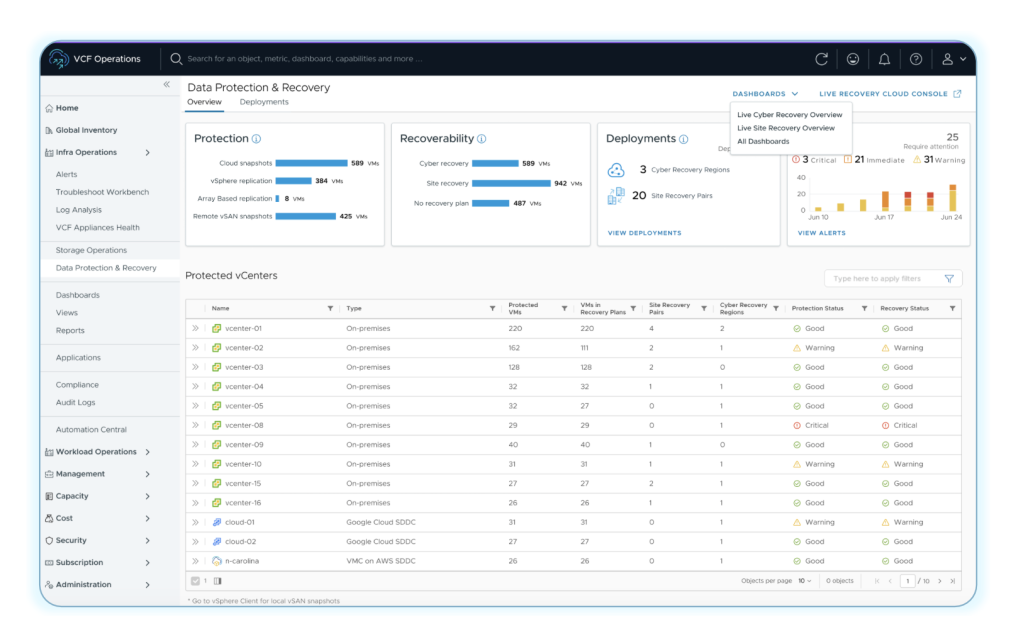
Figure 7: Standardize disaster recovery outcomes across heterogeneous storage vendors.
vSAN for Disaster Recovery
This standardized recovery architecture allows for the replication of virtual machines from external arrays to a vSAN cluster. It simplifies the recovery process by consolidating architectures onto a single target, delivering significant cost savings compared to dedicated appliances.
- Lower Recovery Costs: Achieve significantly lower recovery costs standardized across heterogeneous storage targets.
- Hardware Independence: Establish resilience by replicating any virtual machine from external arrays to a vSAN cluster.
- Rapid Protection: Accelerate initial data protection using replication seeding to manually upload large datasets.
- Data Integrity: Ensure compliance using FIPS 140-3 validated encryption for both data-at-rest and data-in-flight.
Additional Security and Resilience Highlights:
- vSAN for Operational Recovery: Reduce storage operational effort with native, metadata-based automated snapshots.
- Site-Wide Maintenance Mode: Expedite site-level operations for stretched clusters and return to high availability faster.
- Non-Disruptive Resilience: Maintain business continuity through automated vMotion orchestration during site-wide updates.
Looking Ahead
The launch of VMware vSphere Foundation 9.1 marks a strategic pivot toward a high-velocity, performance-optimized infrastructure foundation. Future enhancements will build upon the real-time observability and intelligent automation introduced here, further reducing the gap between physical infrastructure and application performance.
By standardizing on VMware vSphere Foundation 9.1, organizations will not just upgrade their software; they will future-proof their infrastructure against the rising costs of data growth and the complexity of modern hardware. Explore the full capabilities of this release and join us in modernizing the economics of the data center.
Explore the latest resources:
- VMware vSphere Foundation Product Page
- VMware vSphere Foundation Resource Page
- VMware vSphere Foundation 9.1 Customer FAQ
- VMware Cloud Foundation 9.1 Announcement
Disclaimer: All performance and cost improvement claims based on Broadcom internal engineering estimates and hardware test results, 2026, unless otherwise specified. Results subject to change.
Discover more from VMware Cloud Foundation (VCF) Blog
Subscribe to get the latest posts sent to your email.