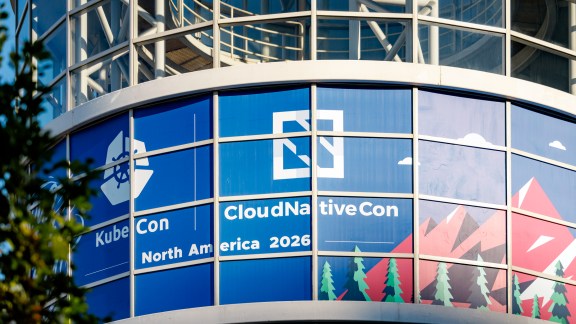

Walk the halls of KubeCon + CloudNativeCon North America 2026 in Salt Lake City, and you’ll notice a subtle but unmistakable shift in how engineers talk about AI. A year ago, the dominant question was whether Kubernetes could handle AI workloads at all. This year, nobody is debating capability anymore. Instead they’re wrestling with the messy reality of running AI in production.
The conversations in Salt Lake City kept circling back to a single tension: enterprises want the speed of autonomous AI, but they aren’t willing to burn down their existing security, governance, and operational models to get it. Here is where the cloud-native ecosystem is actually heading.
AI Infrastructure Is Growing Up and Moving Into the Core
If there was any doubt that AI has become central to the Cloud Native Computing Foundation’s (CNCF) roadmap, the numbers settled it. In its 2026 ecosystem milestones announcement, CNCF reported that its portfolio has reached 231 hosted projects, with 32 added over the past year alone.
What stands out isn’t just the volume of new projects, though, but it’s what they’re trying to solve. With newcomers like Agent Substrate, OpenShell, and OpenRL, alongside llm-d 1.0 and HAMi’s move into incubation, the community is shifting from “how do we schedule a GPU?” to “how do we manage inference routing, accelerator sharing, and agent execution at scale?”
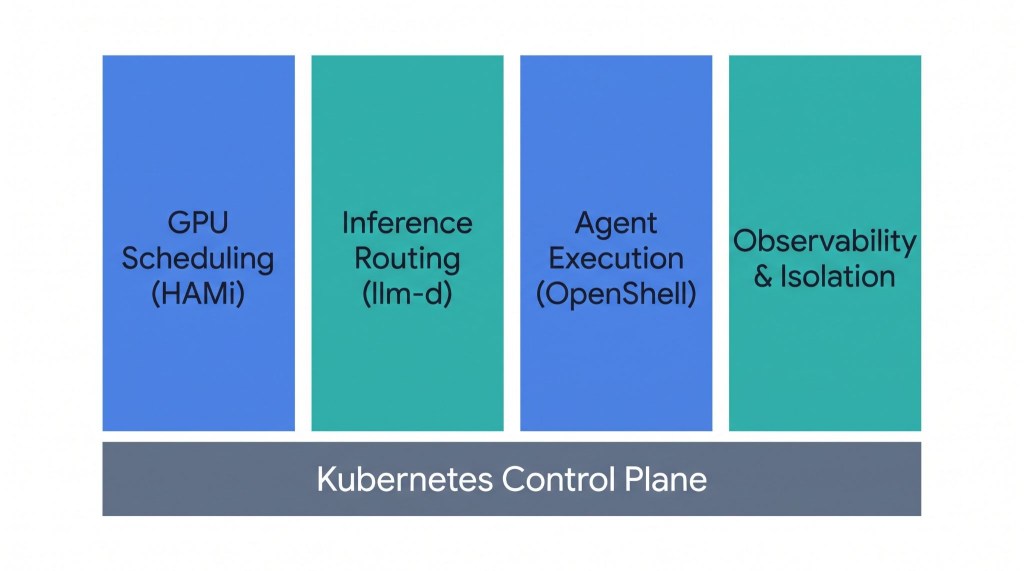
The real bottleneck for enterprises now isn’t a lack of tooling; it’s integration. Nobody wants to maintain a bespoke, disconnected infrastructure stack just to serve models. The winning pattern emerging from KubeCon is embedding GPU scheduling, isolation, and observability directly into the same Kubernetes control plane teams already trust.
Platform Engineering Has a New User…and It Isn’t Human
Platform engineering has officially gone mainstream. According to CNCF’s State of Cloud Native Development Q3 2026 report, 93% of developers now work inside organizations using some form of DevOps standardization or internal developer platform, up from 77% just a year ago.
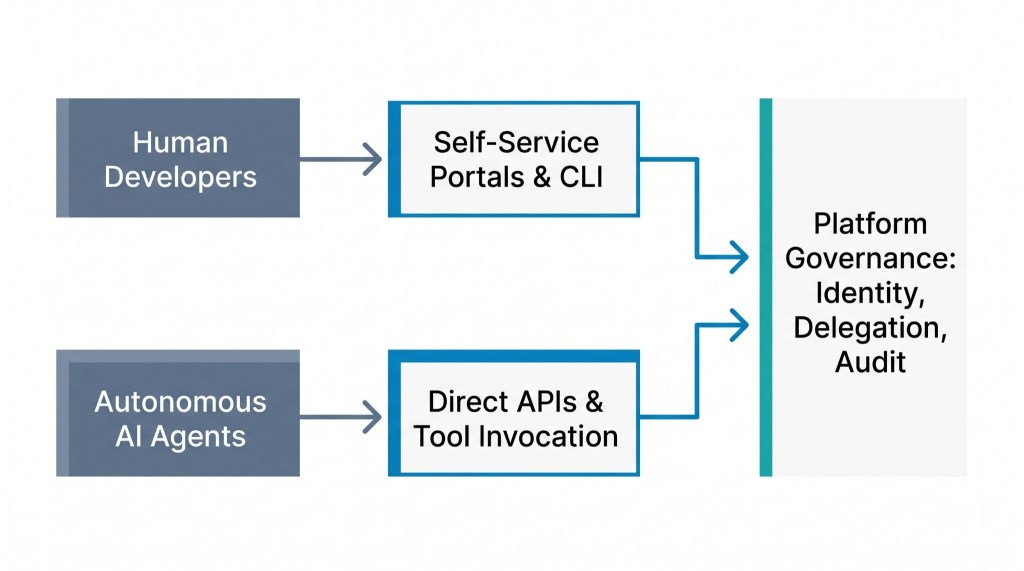
Just as platform teams figured out how to build great self-service portals for human developers, however, a completely different kind of consumer showed up: autonomous AI agents.
Agents don’t click through dashboards or read internal wikis. They hit APIs directly, chain tools together, and trigger operational changes across systems in milliseconds. Trying to govern an autonomous agent with workflows designed for humans is a recipe for trouble. Projects like OpenShell and the broader push around agent identity point to where platform engineering has to go next while treating agents as first-class workloads by solving three core governance questions:
- Identity and Authorization: How are agent credentials managed and strictly scoped?
- Delegation: How is authority safely passed across distributed services without over-privileging the agent?
- Auditability: How are autonomous actions observed and logged in real time?
Conformance Needs to Move Up the Stack
As Kubernetes stretches to absorb AI, virtualization, and edge workloads, portability is once again front and center. Passing baseline Kubernetes conformance tells you a cluster meets the spec, but it doesn’t guarantee your workload won’t break when you move it between environments.
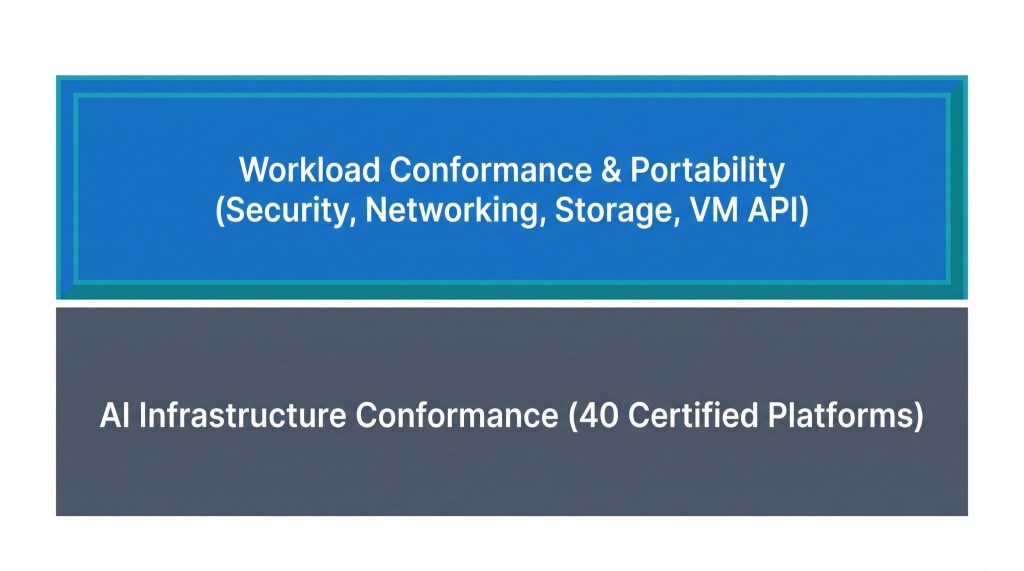
That’s why two complementary milestones at KubeCon matter so much. First, the Kubernetes AI Conformance Program hit 40 certified platforms, giving teams a reliable baseline for AI-ready infrastructure. VMware vSphere Kubernetes Service (VKS) is among the platforms certified under the program, providing enterprises with a conformant Kubernetes runtime integrated into VMware Cloud Foundation. With support for GPU-enabled workloads, automated cluster lifecycle management, and enterprise security controls, VKS provides a foundation for running AI applications and emerging agentic workloads, including those built using technologies such as Agent Substrate.
Second, the emerging Kubernetes Workload Conformance Working Group is tackling the harder half of the problem: ensuring that security, networking, storage, and resource behavior stay predictable for the application itself across different clusters.
Conformance is only part of the equation. Enterprises also need flexibility in choosing the tools that support their applications. Broadcom’s expanding VKS ISV partner ecosystem brings validated solutions across security, observability, networking, storage, and AI, helping organizations build production-ready Kubernetes environments without being limited to a single vendor’s tooling.
Preserving that kind of architectural choice is also what drives Broadcom’s upstream work. The VM API project, newly accepted into the CNCF Sandbox, is developing a provider-neutral Kubernetes API for virtual machine lifecycle management, enabling teams to manage VMs using the same declarative workflows they use for containers without tying the API to a single infrastructure provider.
KubeVM Service brings this approach to VMware Cloud Foundation, allowing teams to provision and manage native vSphere VMs through Kubernetes and GitOps while retaining existing virtualization capabilities, operational visibility, and governance. For a closer look at how these technologies work together, see How VM API and KubeVM Service Deliver Open Standards and Enterprise Execution. You can also read more about how we’re approaching VM and workload portability in Advancing the Cloud-Native Ecosystem Through Open Collaboration.
Operational Resilience and Open-Source Sustainability
It’s easy to get distracted by shiny new agent frameworks at KubeCon, but stateful AI pipelines still live and die by unglamorous fundamentals like storage and disaster recovery. Upstream progress on Velero 1.19 which brings block-level incremental backup and restore and the Container Object Storage Interface (COSI) reflects a simple truth: you can’t claim production readiness for AI if you can’t reliably back up, move, and recover the data feeding it.
Just as important is the human capacity behind the code. The global cloud-native developer population reached 21.2 million in 2026. While AI-assisted coding is making it easier than ever to open a pull request, flooding open-source repositories with generated code puts massive strain on maintainers. Watching CNCF recognize mentors and documentation leaders at the 2026 Community Awards was a timely reminder that sustainable governance and human review (not just code velocity) are what keep this ecosystem resilient.
Looking Toward 2027
If KubeCon NA 2026 proved anything, it’s that the experimentation phase is over. Enterprises don’t need another standalone AI tool. What they do need are unified platforms, predictable workload portability, and battle-tested operational controls.
At Broadcom, our focus across upstream projects like VM API, Velero, COSI, and workload conformance comes down to helping teams bridge that gap without sacrificing openness. (For a full recap of our technical sessions and demos from the show floor, check out AI, Kubernetes, and Cloud Native Innovations: Broadcom at KubeCon North America 2026.)
Heading into 2027, the real winners in cloud native won’t be the teams running the most experiments; they’ll be the ones who figured out how to make those experiments boring, repeatable, and safe in production.
Discover more from VMware Cloud Foundation (VCF) Blog
Subscribe to get the latest posts sent to your email.