
VKS adoption is accelerating. Through our work with enterprise customers deploying production Kubernetes workloads on VMware Cloud Foundation, we’ve learned a critical lesson: the networking and security choices you make can either enable or undermine your Kubernetes success.
Traditional approaches create the exact friction Kubernetes was meant to eliminate: bolting legacy load balancers onto containers, layering point security products, relying on perimeter-only defense. Customers tell us they’re spending weeks on infrastructure configuration that should take hours. Security teams struggle to keep pace with developer velocity. And the comprehensive visibility needed for production operations simply doesn’t exist.
For enterprises leveraging VMware Cloud Foundation (VCF) and VMware vSphere Kubernetes Service (VKS), relying on fragmented, appliance-based security and load balancing solutions introduces high cost, operational complexity, scale-out challenges, and visibility gaps. The right architecture demands a software-defined approach to load balancing and lateral security, one that aligns with the fundamental characteristics of Kubernetes workloads: dynamic, scale-out, delivered as code and service, with comprehensive workload- and transaction-level visibility.
VMware Avi Load Balancer and VMware vDefend lateral security are built from the ground up on software-defined principles, with a centralized control plane and fully distributed data plane. This architecture is purpose-built for Kubernetes. Furthermore, by deeply integrating Avi and vDefend with VKS and VCF, organizations transform their infrastructure into a unified, secure, and highly resilient private cloud platform.
What VKS Customers Tell Us Matters Most
Modern enterprises require infrastructure that matches the velocity of their development teams. Through hundreds of VKS deployments, we consistently hear the same priorities:
- Agility for Modern Apps: Infrastructure must be fundamentally built for speed, enabling self-service deployment while maintaining enterprise guardrails. Manual configuration bottlenecks eliminate the agility Kubernetes promises.
- Shared Responsibility: Security teams need to enforce mandatory policies. DevOps teams need to operate without approval delays. Both requirements are non-negotiable. The solution must enable delegation without degrading security posture.
- Reduced Complexity: Organizations are moving away from disparate point products for classic applications, modern containerized apps, and emerging AI workloads. Operational overhead multiplies when each workload type requires separate bolt-on tools, policies, and expertise.
- Built-in Security: Best-of-breed security and load balancing functionality across all environments isn’t optional. It’s foundational. Organizations demand comprehensive protection from ingress through lateral traffic, integrated into the platform rather than bolted on afterward.
Why VMware’s Integrated Approach Delivers
- Comprehensive Security for VKS Workloads: Multi-layer network and web application security integrated into the fabric of the private cloud platform. This provides defense-in-depth from ingress through lateral traffic, eliminating the gaps that exist with perimeter-only approaches.
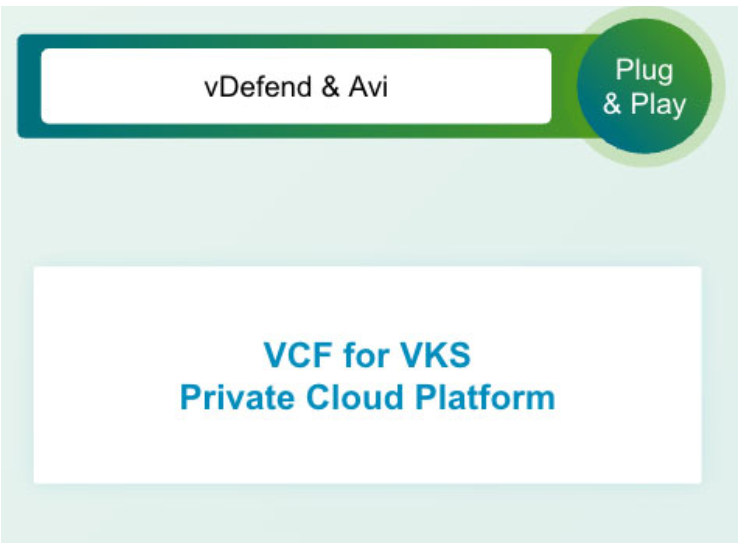
- Plug-and-Play Experience: Seamless integration specifically designed for VKS eliminates manual Helm deployments, network plumbing, and configuration complexity. What takes weeks with external solutions happens automatically at cluster creation.
- Unified Consumption: Built for direct use by both DevOps and Infrastructure teams through consistent interfaces and policy models. Teams develop expertise that applies across traditional VMs, modern containers, and AI workloads, dramatically reducing training overhead.
- Consistency Across Workloads: Identical capabilities work seamlessly for classic applications, modern containerized apps, and agentic AI workloads. This consistency simplifies operations and ensures security policies apply uniformly regardless of workload type.
- Advanced Visibility: Deep application visibility and insights spanning the entire ingress traffic path. This comprehensive observability enables proactive operations instead of reactive troubleshooting.
Accelerate Deployment and Simplify Operations
- Zero-Touch Deployment: Deep integration into VCF Supervisor workflows enables Avi and vDefend automatically across all VKS clusters. No separate installation, no configuration delays. Consistent deployment eliminates one of the most time-consuming aspects of Kubernetes networking and security.
- Automated Lifecycle Management: Avi and vDefend updates are handled automatically as part of standard VCF updates. As VMware releases new capabilities or security patches, your networking and security infrastructure stays current without separate maintenance windows or manual intervention.
- Native VPC Support: Direct integration with VPC networking means the network “plumbing” is already done. Teams no longer build complex manual network configurations. What traditionally requires weeks of network engineering reduces to hours of configuration.
- Avi Analytics: Comprehensive insight into application traffic and latency enables rapid identification of performance issues. When problems arise, analytics correlate network performance with application behavior, cutting troubleshooting time from hours to minutes.
- Validated Interoperability: Pre-tested and validated as a unified solution reduces the risk of downtime or configuration conflicts. VMware engineering validates these integrations together, eliminating compatibility concerns and providing a single support path.
Enable Teams Without Compromising Control
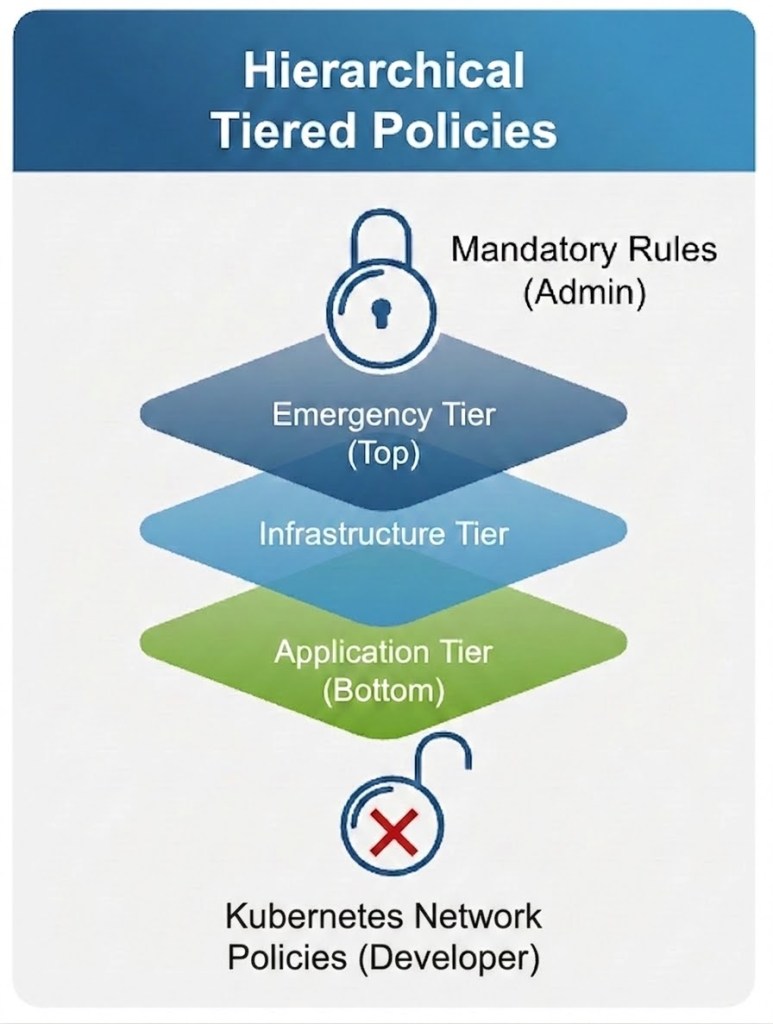
- The most common Kubernetes adoption blocker: security teams that can’t enforce policies at developer velocity. The hierarchical policy model addresses this directly.
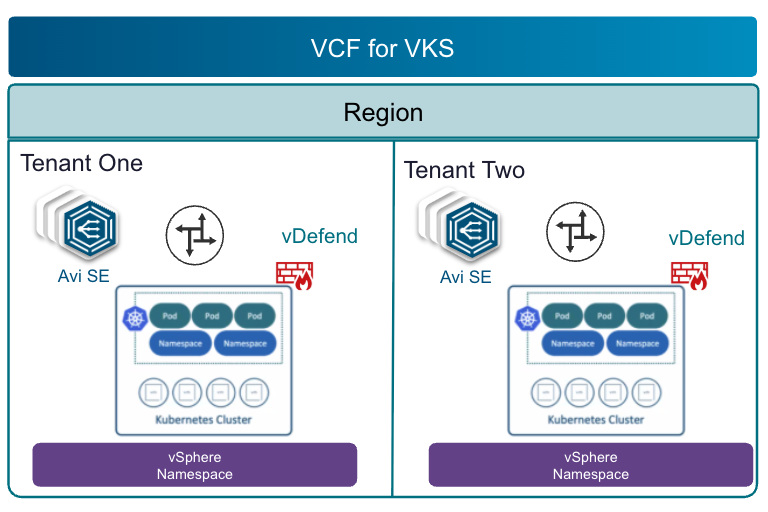
- Hierarchical Tiered Policies: Security teams set mandatory, foundational “Admin” rules that provide organizational guardrails. These policies are immutable and apply globally, establishing the security baseline that cannot be circumvented.
- Developer Autonomy: Within those guardrails, DevOps teams operationalize their own application-specific firewall policies without waiting for manual approvals. This enables the agility Kubernetes promises while maintaining the control security requires.
- Reliable Guardrails: Kubernetes Network Policies created by developers cannot override mandatory security policies set by Security Administrators. This hierarchy ensures application-level policies enhance security within the broader framework rather than weakening it.
Secure Every Connection: Ingress Through Lateral Traffic
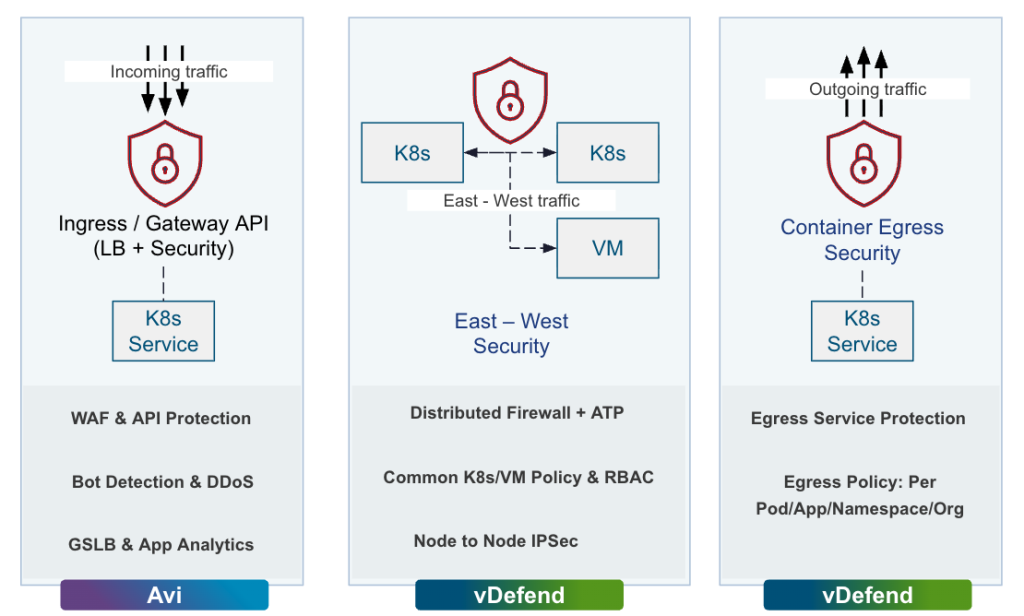
- Stop Threats at the Edge: Avi serves as your container ingress solution with integrated WAF, DDoS mitigation, API rate limiting, authentication, and HTTP policies. This consolidated security and load balancing at the edge protects applications without additional infrastructure complexity.
- Secure Lateral Movement: vDefend’s distributed firewall protects internal environments, securing traffic between pods, across clusters, and between modern containers and traditional VMs, all from unified management. Container-to-container traffic represents a significant attack surface; lateral security eliminates this blind spot.
- Control Outbound Traffic: Granular egress policies prevent data exfiltration and unauthorized communication, applied at pod, namespace, or organizational level. This completes the security posture from inbound through lateral to outbound traffic.
Production-Grade Resiliency at Scale
- Active-Active Availability: Avi Global Server Load Balancing (GSLB) manages traffic across multiple VKS clusters, ensuring applications stay online even if a cluster fails. This distributed architecture provides the high availability production workloads demand.
- Automated Disaster Recovery: Avi GSLB automated failover redirects user traffic to DR sites or healthy locations when sites become unavailable, protecting applications from unexpected outages without manual intervention.
- Secure Elastic Fabric: Automatic provisioning and dynamic scaling of Avi and vDefend matches microservices velocity. Infrastructure scales transparently with application demand.
Frictionless Migration to VKS
- Modernize on Your Schedule: Avi’s Multi-Cluster Kubernetes Operator (AMKO) enables seamless workload migration from other Kubernetes platforms to VKS, supporting modernization timelines that align with business priorities.
- Risk-Free Cutovers: Weighted traffic shifts allow testing new environments before full commitment, ensuring seamless end-user experience during migrations. This phased approach reduces risk and enables confident platform transitions.
Moving Forward
Managing and securing Kubernetes shouldn’t require juggling disparate vendor products. VMware Avi consolidates Layer 4 and Layer 7 load balancing, GSLB, WAF, DNS, and IPAM into a single software-defined solution. VMware vDefend provides zero-trust lateral security for VKS workloads. Both advanced services deliver a consistent operating model across VMs, containers, and AI environments on VMware Cloud Foundation.
We’re seeing strong momentum in VKS adoption as enterprises recognize that production Kubernetes requires more than orchestration. It demands purpose-built application delivery and comprehensive security integrated into the platform foundation. By leveraging Avi and vDefend for VKS, organizations gain a production-hardened Kubernetes environment on VCF private cloud that delivers the velocity developers need with the security and operational simplicity enterprises require.
This integrated approach represents our strategic investment in enabling customer success with VKS. The architecture scales. The operations simplify. And the results deliver measurable business value.
Additional Resources
- BLOG: Modernize and Secure Kubernetes Ingress for VKS on VCF
- BLOG: VMware vDefend: Zero Trust Lateral Security for Kubernetes Workloads on VCF
- WHITEPAPER: Rethinking Kubernetes Ingress
Discover more from VMware Cloud Foundation (VCF) Blog
Subscribe to get the latest posts sent to your email.