
IT infrastructure and operations leaders are at a tipping point that is driven by AI considerations, such as rising AI infrastructure costs, the new AI-accelerated security landscape, and the rapid advance of agentic AI workloads. This is forcing a fundamental rethink of the infrastructure where AI workloads should run, how to secure all workloads in the new AI-accelerated security landscape, and how to do all of that while meeting increasingly complex compliance and resiliency requirements. The message that appears as a common denominator of these issues is clear: organizations need a cost-effective, secure, and governed path to enterprise AI and better defenses against AI-driven security threats.
To address these challenges, Broadcom is updating its portfolio of software products to add new or enhance private AI, security, compliance, and data protection capabilities to VMware Cloud Foundation (VCF), and also to add new solutions to its catalog of Advanced Services for VCF. The new Advanced Services, include the recently announced VMware HyperArmor for a new proactive, real-time defense layer for the ESX component of VCF. Broadcom is also introducing VMware vSphere Express for cost-effective essential virtualization.
Accelerating Private AI Cloud Deployments
With the VCF 9.1.1 release becoming generally available (GA) on September 3, 2026, and the next release currently planned for sometime in Q1FY27, the following are examples of new or upcoming features targeted towards accelerating private AI cloud deployments
- AI Infrastructure Quickstart delivers an automated Day 0 deployment experience for customers to smoothly get started with Private AI Cloud, and is planned as part of the next release of VCF, currently estimated to become GA sometime in Q1FY27. It accelerates AI workload readiness by automating foundational infrastructure and software setup through a streamlined vCenter plugin. By handling vCenter cluster deployment, Supervisor configuration, and VKS cluster provisioning, it drastically reduces Day-0 complexity so teams can innovate faster.
- Multi-tenant Model Sharing is a new feature of VCF, introduced in the VCF 9.1.1 release, that lets customers serve multiple internal units from a single centrally deployed stack with enterprise safeguards such as per-tenant data privacy, security boundaries, and isolated context. Meaning, while the use of this shared model instead of duplicating deployments per tenant inherently cuts infrastructure costs with fewer GPUs and lower TCO, it also enhances tools and controls for data privacy by design considerations.
- vSAN Native S3-compatible Object Storage is an upcoming feature of VCF, planned as part of the next release currently estimated to become GA sometime in Q1FY27, that delivers native object storage capabilities to VCF, including for AI projects, cloud-native applications and backup and recovery workloads. It will have self-service provisioning through vSphere Supervisor or VCF Automation.
The above examples highlight Broadcom’s detailed approach to attending to the needs of enterprise customers, from getting AI infrastructure up and running, to optimizing tools to troubleshoot issues, to better sharing AI resources, and optimizing AI performance and token costs
Stronger Defenses for the AI-accelerated Security Landscape
The advancement of Frontier AI models and the broad accessibility of open weight models have changed the three V’s of cybersecurity threats: the volume, velocity, and variety. Stronger security, compliance, and data protection capabilities are now more critical than ever.
VMware Cloud Foundation is the natural platform for this new landscape, as it already prioritized new feature development that harden security, compliance, and data protection capabilities, – which the latest examples include centralized identity management, data-at-rest and data-in-transit encryption, and VMware vSphere live patching, which applies critical updates to the hypervisor without taking workloads down or placing hosts into full maintenance mode. To further equip customers in this new security landscape, Broadcom is adding the following new capabilities within VCF, as well as adding new solutions to the catalog of Advanced Services available for VCF
- VCF infrastructure configuration management and compliance is a new native VCF feature, planned as part of the next release currently estimated to become GA sometime in Q1FY27, that delivers automation and enforcement of VCF infrastructure components as part of VCF Operations. This enables customers to enhance the security posture of their VCF components such as VMware vCenter and VCF Storage, by shifting from reactive to proactive compliance management, as well as configuration drift detection and remediation. Administrators can continuously monitor VCF component settings against key industry benchmarks, including Payment Card Industry (PCI) and the VCF Security Baseline.
- Confidential computing is a new native VCF capability, made generally available in the VCF 9.1.1 release, across both AMD and Intel platforms that, by encrypting data in use at the hardware level, protects sensitive workloads against CPU vulnerability exploitation, VM-cloning data exfiltration, and cross-tenant data leakage. Cryptographic attestation confirms workloads are running in an untampered state, giving customer organizations verifiable security measures where data privacy is critical, including for regulated, sovereign cloud and AI workloads.
- Virtual Private Cloud (VPC) policy-based connectivity is a new native VCF feature, planned as part of the next release currently estimated to become GA sometime in Q1FY27, that delivers policy-driven connectivity and isolation. Platform engineers can create shared services, define workload isolation and security policies, and apply them consistently across environments, while developers consume network resources through a self-service model without waiting for manual approvals. This accelerates application delivery while maintaining governance and security guardrails.
- Disaster recovery is a new native feature in VCF and VMware vSphere Foundation (VVF) is a new native VCF feature, planned as part of the next release currently estimated to become GA sometime in Q1FY27, that delivers enterprise-scale recovery with orchestration across thousands of workloads, enabling organizations to protect critical workloads and recover quickly from unplanned downtime events, such as from power outages, natural disasters, hardware failures, and human error.
- VMware HyperArmor is a new software offering on the list of available Advanced Services for VCF that was announced at Explore on Tour Frankfurt, that delivers a proactive, real-time defense layer for the ESX component of VCF to protect the hypervisor against AI-accelerated threats. It enables organizations to mitigate vulnerabilities earlier with real-time virtual patching, continuously monitor and protect the hypervisor with positive security guardrails, and neutralize stolen credentials with multi-factor authentication built directly in the SSH login path.
- VMware Live Recovery is a new software offering being added today to the list of available Advanced Services for VCF, that delivers disaster and cyber recovery capabilities for VMware workloads, natively integrated with VCF with a secure and performant clean room that is easy to set up and manage, accelerated recovery through rapid iterations and enterprise-scale orchestration, and significant cost savings from streamlined operations, efficient use of infrastructure, and consolidation of multiple tools.
- VMware Compliance and Configuration Management is a new software offering being added today to the list of available Advanced Services for VCF that delivers VM and container workload compliance and configuration management capabilities, including continuous compliance enforcement with automated remediation for workloads, helping organizations maintain secure settings at scale against compliance benchmarks such industry benchmarks and standards from Center for Internet Security (CIS), Defense Information Systems Agency (DISA), or customer’s own custom standards and benchmarks.
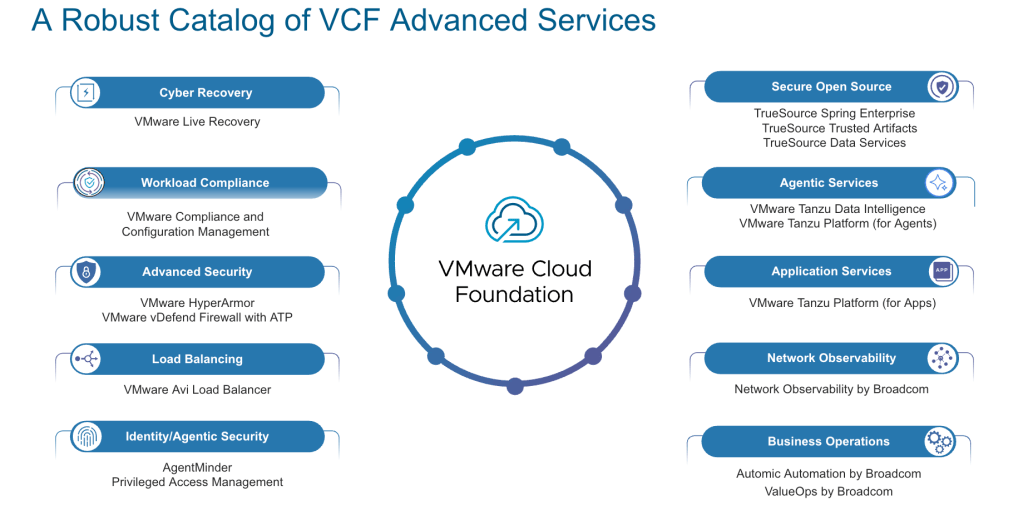
Figure 1: Catalog of Advanced Services for VMware Cloud Foundation
VMware vSphere Express for Essential Virtualization
For customers with smaller environments needing cost-effective essential virtualization, Broadcom is introducing VMware vSphere Express. Built on the reliability, resiliency, and performance of vSphere 9 and available immediately in all regions, vSphere Express delivers core compute virtualization capabilities for customers with 128 cores across all environments with a simplified experience, making it easier for smaller environments on their modernization journey. vSphere Express includes certain essential capabilities, such as:
- vMotion: Live migration of running virtual machines with improved migration speed and efficiency
- High Availability (HA): Automated restart of failed virtual machines
- Distributed Switch: Centralized network management and advanced monitoring
- vCenter Quick Patch: Low-impact, rapid patch management to maximize uptime
- Zero-Trust Security: Built-in TPM 2.0 and vTPM 2.0 support
Learn more about vSphere Express on the vSphere web page.
Furthermore, for customers in countries in the European Economic Area, vSphere Standard version 8 and vSphere Enterprise Plus version 8 will remain available for sale until October 31, 2027, and will have Extended Support included in any active subscriptions to those offerings until the earlier of the applicable subscription end date or October 31, 2028.
What This Means for Your Private AI Cloud
The new updates to VCF features and capabilities, new offerings on the Advanced Services and introduction of vSphere Express show Broadcom’s focused vision of supporting enterprise organizations of all sizes across the globe build their own cost-effective, secure, and governed path to enterprise AI and better defenses against AI-driven security threats. To learn more, talk to your Broadcom account or partner team.
Discover more from VMware Cloud Foundation (VCF) Blog
Subscribe to get the latest posts sent to your email.