
Effective enterprise agents require governed autonomy, data/context integrations, and elastic compute for accuracy, resilience and reliability. However, their dynamic nature conflicts with the need for enterprise control. Organizations want agent efficiency but are challenged by the governance, access, audit, and consistent configurations that help mitigate autonomy risks.
The launch of VMware Tanzu Platform 10.4 continues Broadcom’s investment in helping enterprises deliver safer, more secure agentic capabilities with the introduction of agent foundations. This release balances agent autonomy with enterprise compliance and rapid innovation. Tanzu Platform agent foundations include:
- Secure-by-design environments and buildpacks with zero-trust networking, structural secrets isolation, built-in platform identity, and immutable supply chains
- Governed agent integrations with MCP and API gateways; model brokering, serving and governance; and integrated, low-latency data
- Simplified agent operations with agent observability
- Reliable and more accurate agents with auto-scaling and lifecycle automation and persistent, long-term agent memory
De-risk agents with secure-by-design environments and buildpacks
Running agentic AI in the enterprise requires a robust, isolated execution environment that separates runtime from agent code for better security. Tanzu Platform agent foundations employ a “zero-trust” networking model. Agents must be granted explicit permission for all agent ingress/egress of models, tools, or data. Furthermore, these secure bindings between agents and services strictly limit agent access to authorized service boundaries only, preventing “wandering agents.” This secure-by-default architecture is vital for organizations with stringent regulatory needs, including those requiring sovereign or air-gapped agents. This deny-by-default isolation helps to de-risk AI adoption in highly regulated sectors like financial services and the public sector, where traditional cloud AI liability is unacceptable.
Tanzu Platform agent foundations further enhance agent security by isolating and securing credentials for connected tools, services and other agents during their workflow. This eliminates the need to hard-code keys because they are provided to the agent through an enterprise-grade credential manager that automatically injects secrets into the agents’ isolated environment, reducing credential exposure risks. This robust, isolation-based secrets management approach minimizes sensitive data exposure, as credentials remain hidden during agentic loops or with agent-to-agent interactions. Ultimately, this allows enterprises to accelerate agent deployments without compromising security.
Beyond environment security, software supply chain security is key to building agents from a known good state and reducing vulnerability. Tanzu Platform has always used curated agent buildpacks to reduce supply chain risk. With Tanzu Platform 10.4, we are introducing the Tanzu Platform Agent Buildpack (available as a technical preview), which offers a curated and validated agent execution framework and enables developers to deploy an agent, bind to a model and integrate MCP servers and private data as needed. The pre-built, customizable agent buildpack allows organizations to rapidly deploy and customize pre-built agents, accelerating innovation with a repeatable path to production.
Tanzu Platform’s agent buildpacks enable consistent deployments for all agents, whether they utilize a common framework or are custom-built. This consistency means centralized operators can quickly and universally cascade updates from a single source to all environments, speeding up remediation efforts across an organization.
Govern and secure agent integrations with MCP Gateway
Ultimately, successful AI application delivery is an integration challenge, especially for agents needing standardized connections to tools and data. Enterprise agent integrations can be complex and nearly every system with an API needs agent-ready access. Without centralized governance, managing proliferating MCP servers, alongside agents, skills, models, and workflows, quickly becomes a compounding problem.Despite new integration methods like Model Context Protocol, AI agent delivery is still hampered by the “accountability gap”—the inability to audit autonomous tool usage by agents. Current protocols like OAuth lack the necessary identity layer to link an agent’s decisions to a human who’s invoked the agent loop. Tanzu Platform 10.4 addresses the friction of agent tool use by integrating OpenID Connect (OIDC) as a “digital passport” in the MCP Gateway, making every agent’s use of tools verifiable and auditable. This identity framework turns agents from “black box apps” into governed corporate assets, offering greater transparency.
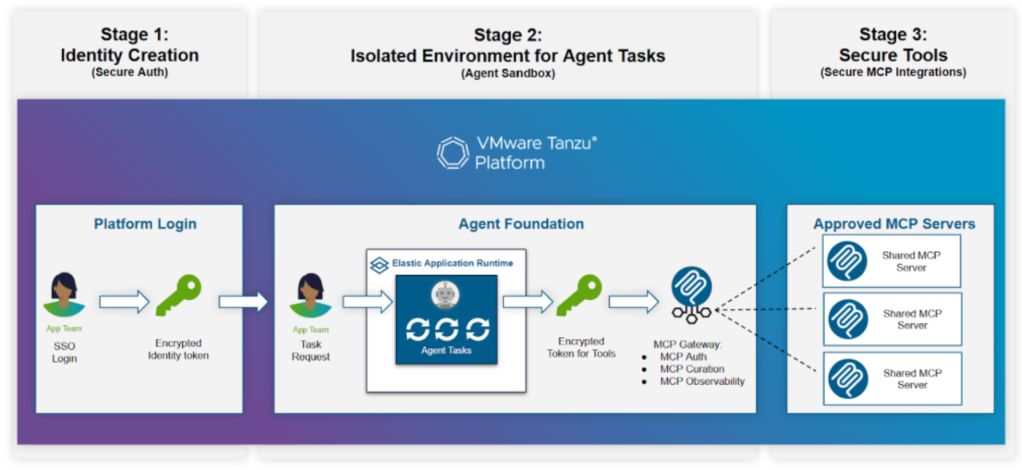
Figure 1: Secure and Auditable Agent Tool use with MCP Gateway architecture
Agent foundations in Tanzu Platform 10.4 leverage the new MCP Gateway to enhance AI agent security and risk mitigation. The Tanzu Platform MCP Gateway centralizes agent tool calling by routing all agent actions through the gateway, preventing risks from unmonitored shadow MCP servers. Organizations can vend access to data, models, and tools through managed MCP servers on Tanzu Platform, so that agents use approved, compliant sources and actions. This centralized management increases visibility, leads to safer agent workflows, provides faster failure triaging, and improves the agent feedback loop, enabling continuous refinement of agent “judgment” for better ROI. Agents can connect to MCP servers running remotely or on Tanzu Platform, accommodating SaaS use cases and situations where off-the-shelf software vendors have integrated their MCP servers directly into their product. This means organizations can be more flexible with their MCP server deployments while also experiencing the benefits of observable connections through the MCP Gateway in Tanzu Platform.
Simplified agent operations with agent observability
Tanzu Platform provides AI application and model observability, enabling continuous improvement through performance monitoring. Organizations can monitor and evaluate AI applications as well as model quality, latency, and behavior metrics to expedite root cause analysis. Teams can also track token usage to optimize model costs or swap models to maximize impact.
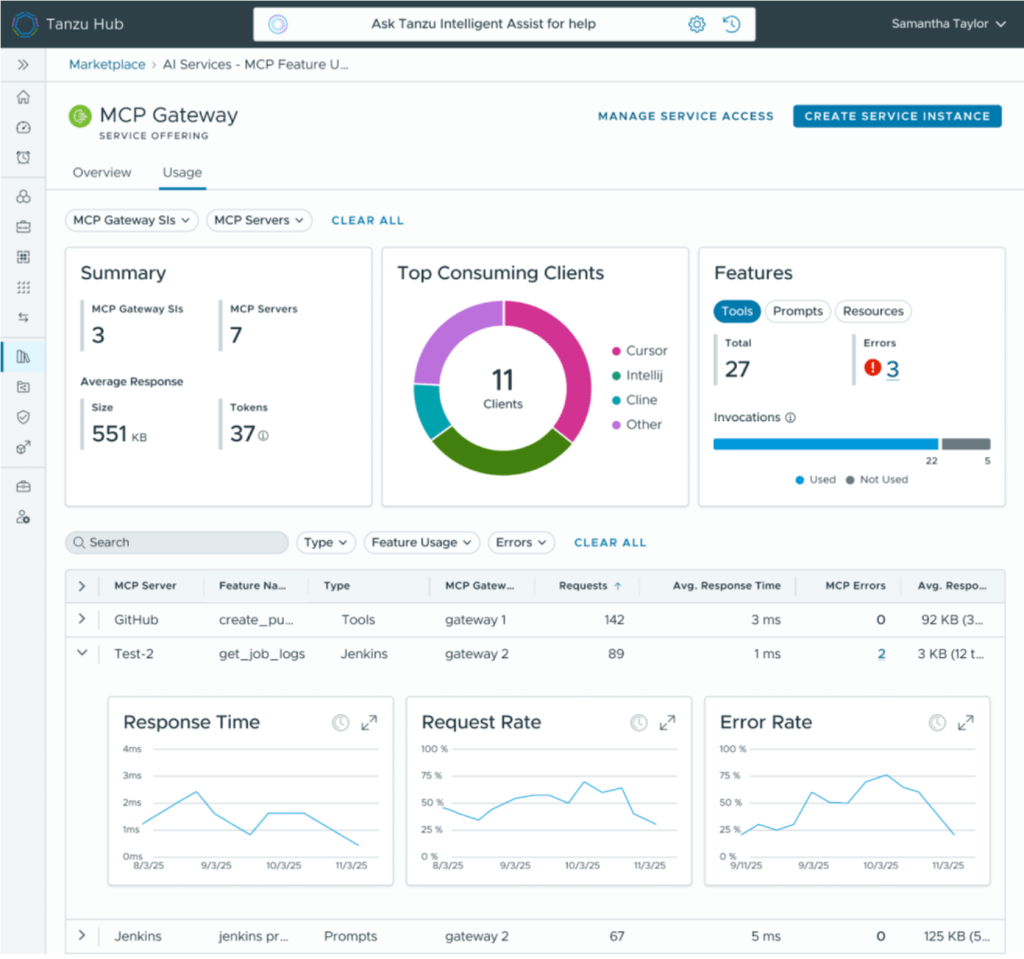
Figure 2: MCP Gateway enables organizations to observe agent tool use
Tanzu Platform agent foundations include built-in observability for AI and agentic applications. New features include out-of-the-box dashboards and the ability to track model consumption by application, service, space, or org, aiding in root cause analysis and addressing agent drift. Additionally, enhanced MCP server usage observability allows teams to focus lifecycle management on active servers and retire unused ones, reducing related technical debt.
Tanzu Platform 10.4 now also includes showback and chargeback features, providing granular, per-application cost visibility—including for agents—to better understand ROI. Platform and application teams can now track and compare individual model usage over time, allowing them to refine agents, apply limitations, and improve the cost per agent, which is essential given agents’ potential to substantially increase costs without ongoing optimization.
More resilient and more accurate agents with autoscaling and persistent memory
AI innovation demands faster, incremental updates to agentic applications. Models and patterns are in constant flux and require frequent redeployments. This shift from static release cycles to continuous, incremental redeployments helps agents to remain performant. Tanzu Platform facilitates faster redeployments for agents by providing automatic repaving of environments to a known good state when agents are redeployed. Because Tanzu Platform provides a technology-enabled continuous upgrade approach, organizations can help accelerate the pace of agent innovation while improving security, and strengthening collaboration between platform teams and developers.
Besides the pace or redeployment, agents also require environment flexibility and scalability as they execute their autonomous problem solving loops. With Tanzu Platform 10.4 we are extending the high availability capabilities to the new agent foundations, enabling teams to transition from experimentation to running resilient, scalable agents in production. This resilience spans from the infrastructure level up to the agent runtime within the agent foundation, enabling organizations to increase agent uptime through automatic environment scaling.
Further, to enhance agent efficiency and accuracy, Tanzu Platform offers existing capabilities designed to extend to persistent, long-term memory of agents. Stateless agents are provided with memory through integration with VMware Tanzu for Postgres with PG vector and Spring AI episodic chat memory, allowing these agents to maintain contextual awareness during autonomous actions. This is vital for “agent-as-coworker” scenarios spanning hours or days, where the agent needs to recall past interactions (human prompts, past problem-solving, or data interaction) to fulfill its mission. Tanzu Platform also enhances agent accuracy by providing secure access to an organization’s private data. By integrating enterprise context, organizations help to reduce model hallucinations.
Extending Tanzu Platform for enterprise AI agents
This release of Tanzu Platform introduces a streamlined and governed approach to agent delivery. Ultimately, agent foundations extend Tanzu Platform’s developer simplicity and secure-by-default architecture to agentic AI. Tanzu Platform agent foundations offer a deny-by-default sandbox with autoscaling and automated, enterprise-ready credential management to deliver safer agents. It also provides more options for building agents with new agent buildpacks that offer built-in agent loops and custom code frameworks for Java with Spring AI, as well as Python buildpacks. This release increases control and visibility of MCP servers through a new MCP gateway that enables ongoing observability. We also are supporting more resilient agents at scale with elastic compute and unified lifecycle automation to help make agents more seamless and reliable. All this helps simplify enterprise agent delivery for the most sensitive, regulated industries so they can take advantage of agent efficiencies while upholding their stringent requirements for safety, compliance, and responsibility. Learn more about our AI use cases.