
VMware Cloud Foundation is the best platform to future-proof IT workloads
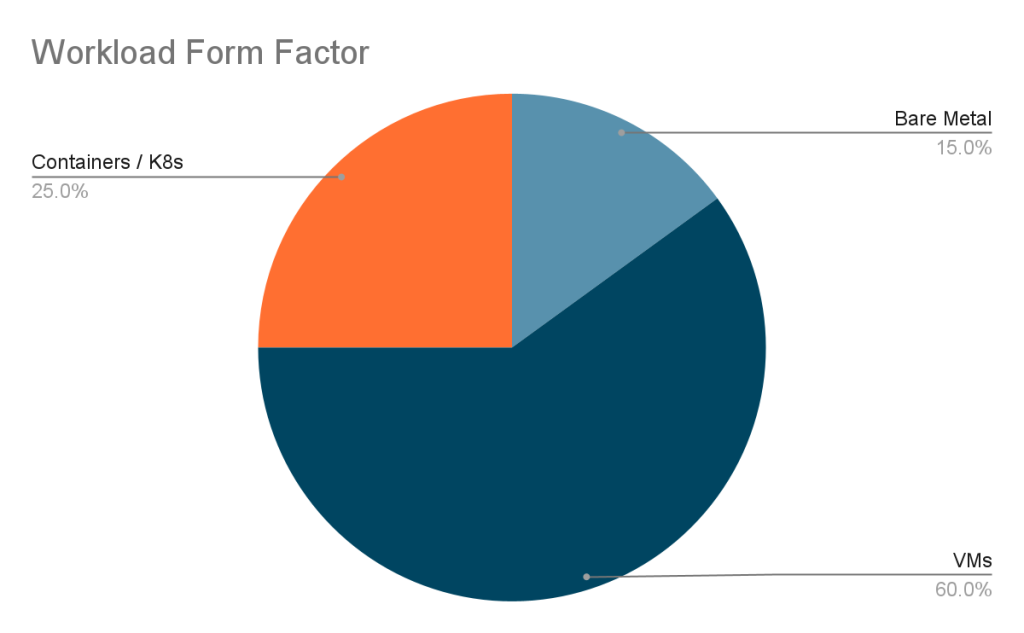
All IT workloads, agnostic of form factor or purpose, require infrastructure. At any point in time, there is a finite amount of silicon on the planet, and the breakdown of workloads that live on it is ever changing. However, the current trend of workload form factors is well known and can be pictured as follows (exact numbers may differ):
Current Day (Feb 2026)
- Bare Metal: ~15%
- Virtualized (Run on VMs): ~60%
- Containers + Kubernetes: ~25%*
- *up to 85% of containers / Kubernetes workloads run on top of VMs – further reading here.
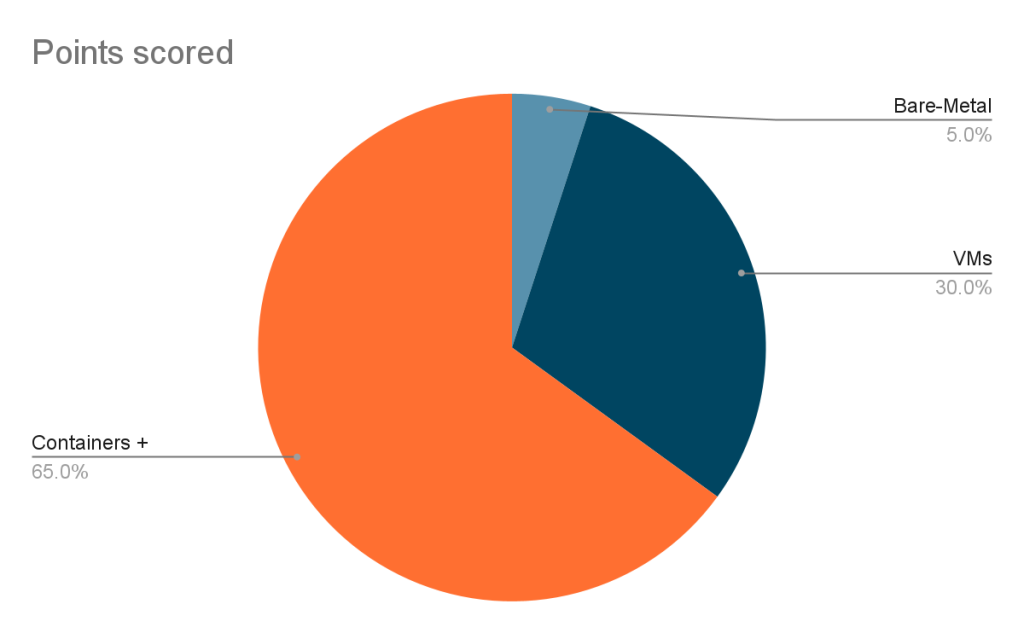
Future (2030+)
- Bare-metal: ~5%
- Virtualized (Run on VMs): ~30%
- Containers + Kubernetes: ~65%
- *more than 85% of containers / Kubernetes workloads are expected to run on top of VMs in 2030+
- Figures reference data presented in this paper
What’s driving this trend?
There is a plethora of evidence supporting this trend – app modernization, DevOps organizational maturity, and cloud transformations – these efforts continue across most organizations. Additionally, the overall number of new workloads is poised to explode from the impact of GenAI. Most of these applications are following cloud-native development patterns and require modern infrastructure and operations strategy in order to reliably land and manage them in production.
Never has it been easier for humans to produce new code that meets a need – and new code needs infrastructure: compute, networking, storage. Provisioning, patching, upgrading, hardening, optimizing, and recycling will be top priority for IT leaders and engineers. Hyperscalers offered, and delivered, alleviation to organizations by managing much of infrastructure life cycle operations, but concerns about cost, compliance, and data sovereignty are key drivers of the Private Cloud Reset.
The industry is at an inflection point
As leaders evaluate potential partners to build out their private cloud strategy, they must balance their ability to continue running and optimizing their mission critical applications and infrastructure while iterating and innovating with new technologies and workloads. Naturally, organizations are seeking platforms that offer a unified platform that standardizes operations for workloads that live in VMs and containers. For decades, the industry has trusted VMware vSphere as the go-to virtualized infrastructure platform for mission critical workloads.
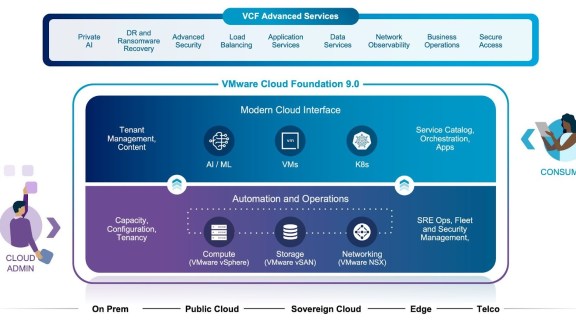
Building on vSphere and server virtualization with the introduction of VMware Cloud Foundation (VCF), Broadcom bridged the capability gap that the industry identified between public cloud operations and traditional IT environments, and layered on the advantages of on-premises computing: cost and resource controls, customization, security, privacy, and compliance.
With VCF, Kubernetes is a first class citizen in the modern private cloud. Bolt-on Kubernetes solutions on top of an infrastructure layer invariably causes administrators and platform engineers to wrangle dependencies and troubleshoot infrastructure abstractions instead of focusing on priorities that align to business value. VMware vSphere Kubernetes Service (VKS) is VCF native, and provides the ability to rapidly provision fully conformant Kubernetes clusters on demand. VCF abstracts infrastructure and makes it available for consumption via APIs, and delivers a rich set of cloud native services and packages alongside LTS enterprise support. All workloads – whether they live on a VM or in a container – can be rapidly deployed, optimized, life-cycled, and monitored using the same tools and processes.
Proof of value lies in the results. To date, more than 90% of the top 10,000 VMware customers have purchased VCF, including nine of the top 10 Fortune companies. Leading companies such as Audi, ING Bank, Lloyds Banking Group and Walmart are adopting VCF and deepening their partnerships with Broadcom. Broadcom’s own internal IT teams have adopted this technology and a cloud operating model to consolidate datacenters and toolchains while improving overall system reliability, improving time to provision applications and infrastructure, and decreasing costs. Most important, the number of workloads managed by Broadcom IT increased during this private cloud transformation.
Enterprises need to go fast, control costs, and protect against threats. They need the flexibility of the cloud, while leveraging the tools and skillsets their IT organizations have built their careers on. They have relied on vSphere to run their business for decades, and see the future in a unified private cloud platform that can support all workloads that makes modern cloud consumption and operations possible.
With VCF, Broadcom has delivered that platform.
Discover more from VMware Cloud Foundation (VCF) Blog
Subscribe to get the latest posts sent to your email.