
In the race to modernize, many enterprises have unintentionally built a “multi-platform tax.” Today, the typical IT organization manages three distinct silos: one for traditional VMs, one for modern Kubernetes containers, and yet another for fragmented, often public-cloud-based, database services.
Each silo comes with its own set of tools, its own security protocols, and its own specialized (and expensive) talent requirements. This “tool sprawl” isn’t just an IT headache—it’s a direct drain on your bottom line, slowing down development and increasing the risk of human error.
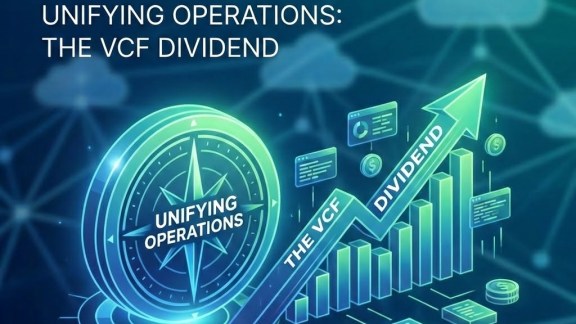
The solution is achieving the Unification Dividend.
By consolidating disparate tools and operations onto VMware Cloud Foundation (VCF) and supporting key databases with a purpose-built Advanced Service, VMware Data Services Manager (DSM), you can finally eliminate the friction between infrastructure and innovation.
Eliminating the Silo Tax
When you integrate VMware DSM into your VCF environment, you unify your operational model. This consolidation delivers value across three critical dimensions:
- One platform, three workloads: Whether your team is deploying a legacy Windows SQL Server VM, a containerized app on VMware vSphere Kubernetes Service (VKS), or a high-availability PostgreSQL cluster, they do it through the same VCF control plane.
- Unified security and governance: Instead of maintaining three different security postures, your database services inherit the same world-class micro-segmentation and identity management already protecting your VMs.
- Reduced talent pressure: You no longer need separate “specialists” for every database type or infrastructure layer. Your VCF admins can now manage a global fleet of databases with the same tools they use for compute and storage.
Real-World Velocity: The Broadcom IT Blueprint
We know this approach works, because it is the foundation of our own internal transformation. Broadcom’s Global Technology Organization (GTO)—which serves all 26 of our business divisions—faced the same sprawl challenges our customers do.
By moving to a unified model with DSM on VCF, they achieved remarkable results:
- 6-week implementation: They moved from a legacy, fragmented model to a full production DBaaS environment in just six weeks.
- $10M+ annual savings: By repatriating workloads from high-cost public cloud services (like AWS RDS), they realized massive operational savings.
- Scale without headcount: Today, a lean infrastructure team manages over 100+ database clusters (serving thousands of R&D developers) without needing a dedicated team of database specialists.
Watch the full story of Broadcom’s data transformation here
Consolidating for the Future
The goal of unifying infrastructure is to make it invisible. When you treat data services as an Advanced Service within VCF, you stop being a “broker of tickets” and start delivering more value with a platform that simply works.
You gain the agility of the public cloud with the security, cost predictability, and operational simplicity of a single, unified private cloud. The “Unification Dividend” is your path to reducing complexity and redirecting your resources toward the applications that drive your business forward.
Read more blogs in this ongoing series about VMware Data Services Manager for IT practitioners and managers. Recent posts include:
| Building the Foundation for Private AI: Why Data Sovereignty Matters | Explores DSM as the secure data layer for AI strategy. Discusses running AI workloads adjacent to data for performance and sovereignty. |
| The 75% Productivity Gain: Moving to Policy-Based Database Management | Focuses on the pain of manual ticketing and provisioning. Explains how DSM automates Day 2 operations like patching and scaling, providing cloud-like agility on-premises. |
| The CFO’s Case for On-Premises DBaaS: Repatriation and Cost Control | Analyzes the financial imperative of modernizing private cloud to cut TCO. Discusses leveraging capitalized assets to eliminate egress fees and licensing premiums. |
Discover more from VMware Cloud Foundation (VCF) Blog
Subscribe to get the latest posts sent to your email.