
The licensing framework for VMware Cloud Foundation (VCF) 9.1 continues to evolve, reducing complexity and administrative overhead. Previously, license usage acknowledgment was a recurring manual task — one that had to be performed every 180 days by an administrator with the right access. VCF 9.1 eliminates the manual cycle entirely. Licensing is no longer a manual chore, but now a seamless part of your infrastructure. Whether you are managing a single site or a large enterprise with multi-tenant environments, new licensing updates including license programmability provide the operational flexibility you need to run a private cloud efficiently.
For organizations, these licensing enhancements simplify VCF deployment by leveraging VCF Operations and the VCF Business Services console available also on the Broadcom support portal. The improvements also streamline license management while providing the flexibility required for advanced deployment scenarios.

Figure 1. Licensing with the VCF Business Services console is found at the Broadcom Support Portal or with direct access through vcf.broadcom.com
1. Automated License Process
Previously in connected mode deployments, administrators had to manually acknowledge refreshed license files once every 180 days.
VCF 9.1 connected mode deployment does away with the manual administrative overhead and implements automated license file downloads every 24 hours. Once connected mode is selected, automation of the license usage process becomes the default behavior. License usage data is transmitted to Broadcom every 24 hours, and an updated license file is downloaded and applied automatically—with no administrator intervention required. Customers who prefer to review the license file before updating can configure licensing to be in disconnected mode and manually click to send their license usage files once every 180 days.
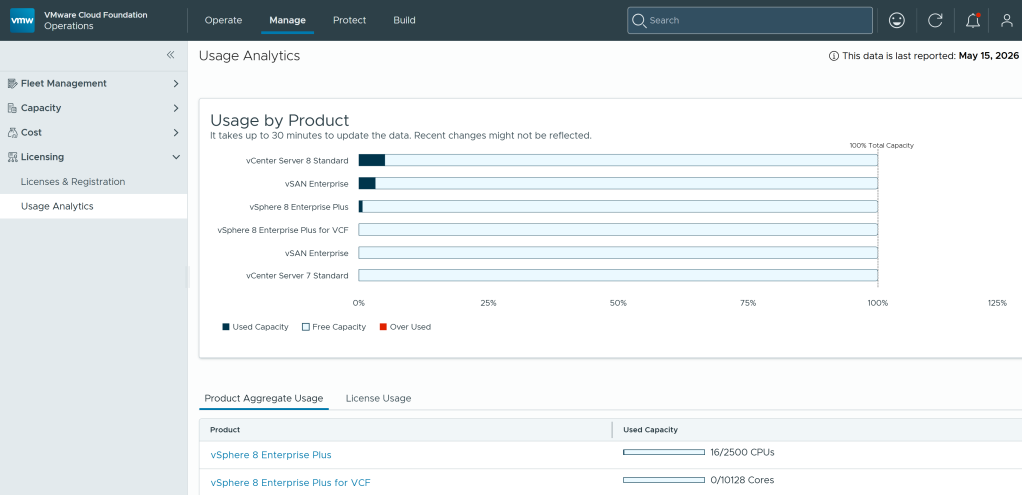
Figure 2. VCF Operations provides a view of licensing capacity, used licensing capacity, free capacity, and licensing issues across VCF 9.1 and earlier licenses.
2. New License Server Architecture
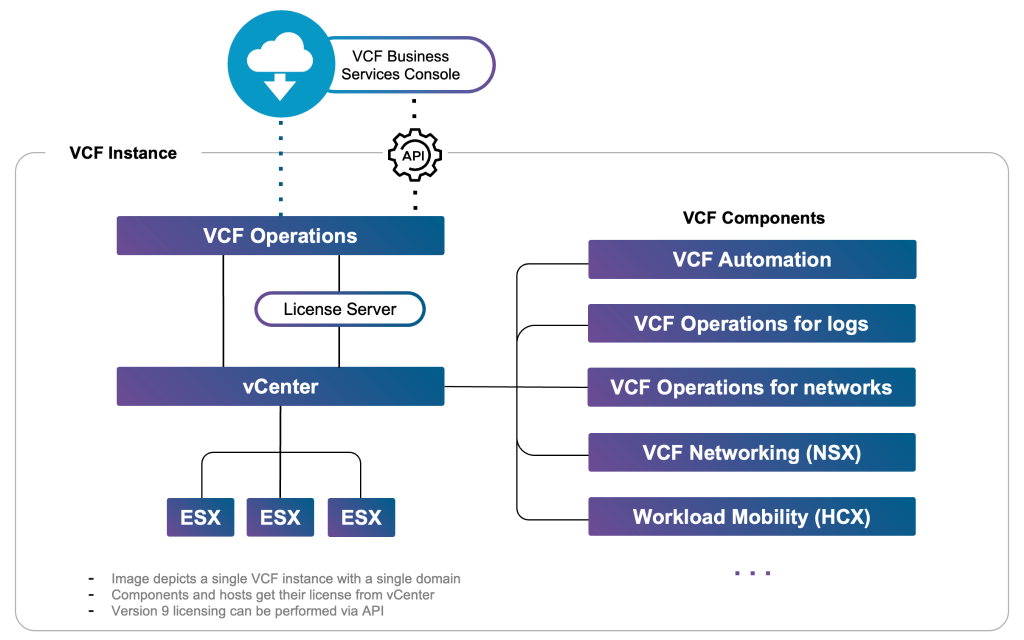
Figure 3. VCF 9.1 introduces a local license server as part of its architecture designed specifically for centralized license management. This new component centralizes all licensing data with enhanced protection.
Streamlined Management:
- The license server installation is automatic with the VCF Operations installation.
- The license server is automatically upgraded during new versions of VCF Operations.
A local license server allows for flexible scaling and control of licenses without impacting VCF Operations. VCF Operations continues to be where you manage licenses.
3. Multi-License Flexibility: One vCenter, Multiple License Types
Previously, organizations needed to deploy separate vCenter instances for different primary license types, such as VCF and VCF Edge. VCF 9.1 simplifies this by supporting multiple primary licenses and even licenses from multiple Site IDs within a single vCenter instance.
Consider a retailer that uses standard VCF licenses for its core data centers but relies on VCF Edge licenses for its multiple store locations.
Previously, these environments would be managed separately. With VCF 9.1, the retailer can manage both the core data center hosts and the remote store hosts within the same vCenter.
This allows:
- Unified visibility to view and manage the entire fleet.
- Reduced complexity by consolidating multiple vCenter instances of different primary license types.
- Expanded options to deploy infrastructure based on business needs.
4. License Management for Large Enterprises with Role-Based Access Control and Multi-Tenant Support
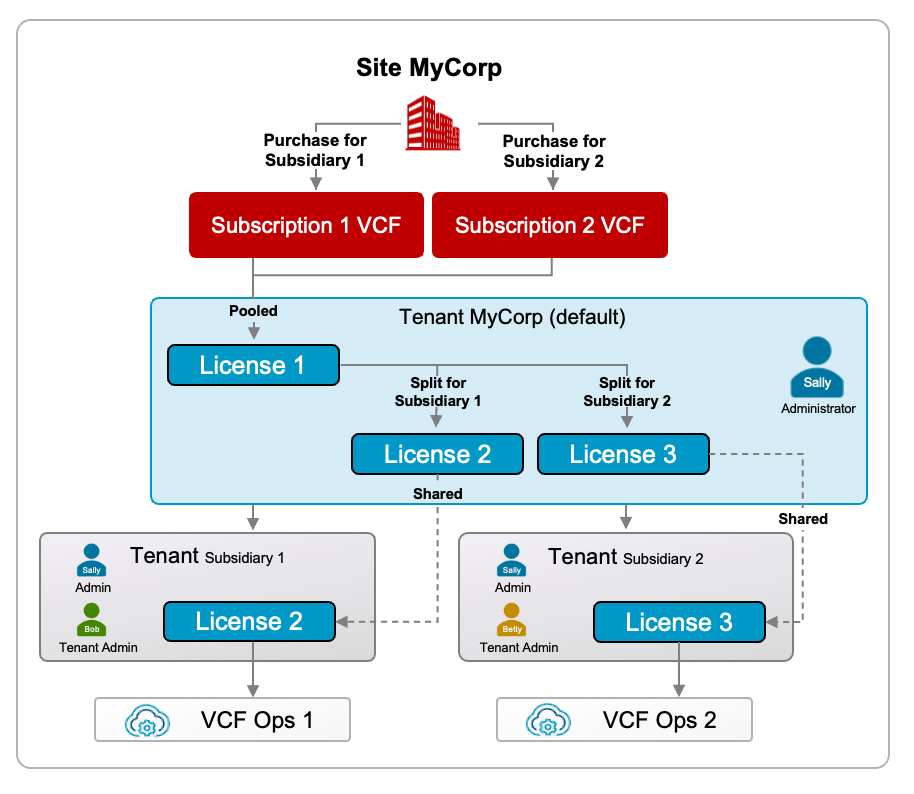
Figure 4. There are now granular role-based licensing controls through the VCF Business Services console, enabling precise delegation of license management responsibilities. This allows different departments to manage their own licenses while the main license administrator maintains overall oversight.
Three New Licensing Roles:
- License Refresh Role – Executes specific licensing actions without full administrative rights.
- Tenant License Manager – Manages licenses for a single tenant in isolation.
- Read-Only Role – Provides read-only visibility for compliance and reporting.
The Business Services console now supports tenant-specific licensing, including license sharing between tenants. This architecture allows service providers and large enterprises to delegate multi-tenant license management safely while maintaining control and visibility.
Administrators managing the overall licenses can limit license management permissions to specific departments or tenants. For example, compliance teams can be provided with read-only auditing capabilities without administrative access. Operational teams receive the exact permissions they need to manage licenses and nothing more.
5. Licensing APIs for Enterprise Customers
With the previous release, licensing APIs were available for use by service providers only. Licensing APIs are now accessible to all customers in VCF 9.1. Customers operating in disconnected environments can build programmable automation with APIs to transfer license files through internal management networks.
Integration Opportunities:
- Automated license file distribution across multiple locations.
- Integration with existing IT automation platforms.
API availability transforms licensing from a manual administrative task into an automated, programmable component of infrastructure operations.
VCF 9.1 Licensing Is Easier
These VCF 9.1 licensing improvements represent more than incremental updates—they make licensing easier. For organizations planning VCF 9.1 adoption, the licensing enhancements deliver immediate simplicity.
The licensing framework in VCF 9.1 aligns with modern operational requirements for greater automation, flexibility, and programmability.
Simplified Operations:
- Streamlined license management with APIs through the VCF Business Services console and VCF Operations.
- Unified license tracking eliminates compliance complexity.
- Automated license renewal removes manual 180-day license usage cycles.
Enterprise-Scale Flexibility:
- Single-fleet deployment across multiple sites.
- Multi-subsidiary license management for organizations with separate IT departments.
- API-driven licensing enables programmatic administration and integration.
The licensing framework in VMware Cloud Foundation 9.1 is further simplified. Automated programmable maintenance, centralized control, and flexible multi-tenant governance give enterprises greater confidence to manage licensing at the scale they need. API-driven capabilities give operations teams the precision to manage their distributed environments efficiently.
Customers can refer to the Specific Program Documentation (SPD) for VCF license details. For enterprises modernizing their private cloud, Broadcom has made VCF license management straightforward and purpose-built to scale as your deployments grow and change. For teams managing private cloud at scale, VCF 9.1 improves the speed and time needed for licensing. Explore the VCF 9.1 launch page to learn more about how your infrastructure can benefit.
Acknowledgements
Special thanks for contributions to this blog:
Michael Curnutt, Anurag Dalmia, Ali Emadi, Mei Huang, Morry Katz, Mauricio Mayorga, and Jeremy Winkler
Resources
Broadcom Announces VMware Cloud Foundation 9.1
VMware Cloud Foundation: Launch Page VCF 9.1, Webpage
VCF 9.1 Licensing Documentation
Getting started with VMware Cloud Foundation (VCF) or VMware vSphere Foundation (VVF) V9 Licensing
VCF Specific Program Documentation (“SPD”)
Blog: Scale, Simplify, and Secure Your Private Cloud Operations with VCF 9.1
Discover more from VMware Cloud Foundation (VCF) Blog
Subscribe to get the latest posts sent to your email.