
Every engineering leader knows the feeling: your business wants to move fast, ship features, and lead the charge into the era of AI and autonomous agents. Yet, your developers are spending more time playing platform engineer than writing business logic. They are tangled in a mess of YAML files, stitching together open-source projects, managing build pipelines, and waiting in ticketing queues.
We love calling developers “builders,” but somewhere along the line, we confused building business value with assembling the underlying plumbing. Handing a team a raw Kubernetes cluster and telling them to “go build” isn’t actually delivering an application platform—it’s handing them an orchestration engine and a massive operational burden.
The modern friction of why AI amplifies the infrastructure trap
The arrival of generative AI and agentic workflows has only made this gap more glaring. Everyone has an executive mandate to write intelligent agents, integrate Model Context Protocol (MCP) gateways, and plug into specialized LLM endpoints.
In a traditional Container-as-a-Service (CaaS) model, forcing developers to build all of this plumbing themselves creates immense friction. They aren’t just writing code; they are responsible for hardening container runtimes, wiring up persistent data stores, configuring load balancers, and ensuring context-switching doesn’t compromise security.
When developer cycles are eaten up by infrastructure maintenance, the promise of rapid AI innovation stalls out long before it ever reaches production.
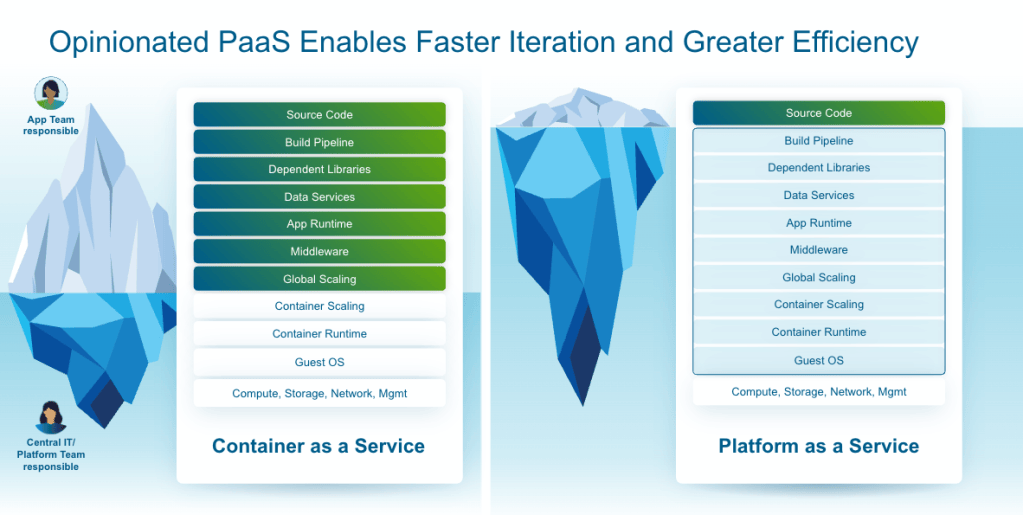
Fig. 1: Infrastructure-related responsibilities for an application team across container-as-a-service model and platform-as-a-service model
Reimagine the contract: from plumbing to abstracted power
What developers actually want hasn’t changed, but the stakes are higher: zero-friction abstraction, invisible security guardrails, and instant access to modern innovation. They want to push code and watch the platform take care of the rest—packaging images, configuring variables, and deploying to a secure, highly available environment.
This is the core promise of delivering an opinionated Private cloud Platform-as-a-Service (PaaS) with VMware Tanzu Platform on VMware Cloud Foundation (VCF). Instead of forcing platform teams to constantly answer support tickets or developers to maintain fragile infrastructure glue, the platform acts as the invisible engine.
Standardizing the future with purpose-built foundations
To support both traditional microservices and complex AI architectures without cluttering the developer experience, Tanzu Platform introduces modular “Foundations” which provide pre-engineered execution capacity designed for specific workloads:
- App Foundation: Tailored for core application workloads, streamlining microservices and custom application code directly from source to production.
- Services Foundation: Optimized for managing stateful data and services, enabling seamless, self-service access to on-demand data stores like PostgreSQL or MySQL without requiring manual credential passing or ticketing queues.
- Agent Foundation: Purpose-built specifically for AI and agentic workloads. It comes pre-packaged with out-of-the-box AI buildpacks, MCP server integration, and AI gateways, letting developers deploy intelligent agents directly into a runtime equipped for agentic execution without assembling the AI stack from scratch.
- AI-Ready Data Foundation: Designed specifically to govern agent access to trusted enterprise data. It bridges the gap between data science teams and platform engineering by making curated, secure data products readily consumable for agents and developers alike.
The power of VMware Cloud Foundation and VKS
What makes this model truly effortless for platform engineering teams is how VMware Tanzu Platform is uniquely situated directly on top of VMware Cloud Foundation (VCF).
Rather than reinventing cluster orchestration or forcing platform teams to construct complex management overlays, Tanzu Platform hooks directly into VCF’s native Supervisor Services, VM Service, and vSphere Kubernetes Service (VKS). Because your VI admins have already set up the underlying VCF compute, network, and storage regions, platform engineers don’t need to fight low-level infrastructure setup.
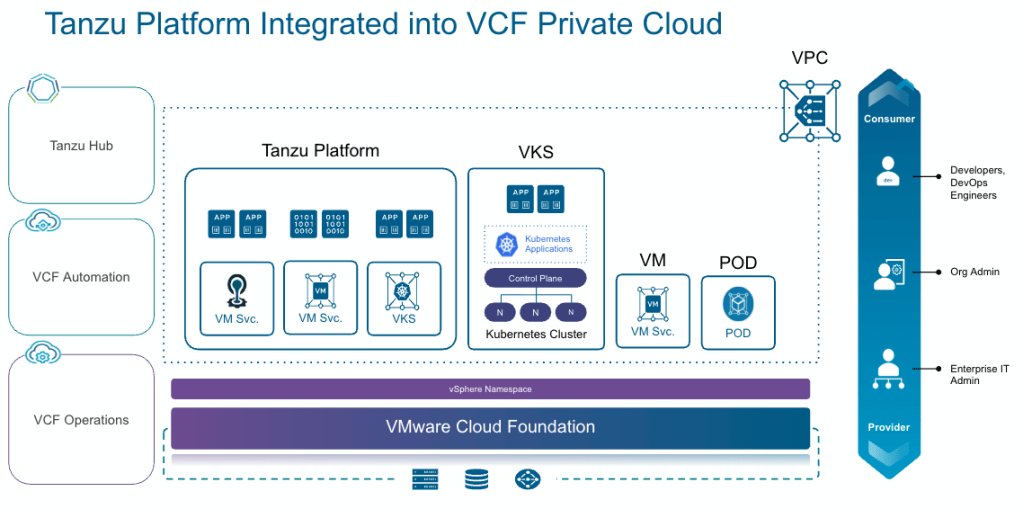
Fig. 2: VMware Tanzu Platform is the application platform for VMware Cloud Foundation
This native VCF integration turns what used to be weeks of painful platform architecture into a simple, automated vending process:
- Frictionless VKS & Profile Vending: Platform engineers don’t need to be experts in the inner workings of every AI buildpack or agentic framework. Through Tanzu Hub, standing up an enterprise-grade environment is as simple as selecting a pre-configured profile, like an Agent Foundation, and vending out the capacity into a VCF region in just a few clicks. The platform automatically provisions the underlying VKS clusters and wires up networking and load balancing natively.
- Automated Full-Stack Lifecycle Management: Day two operations are where traditional platforms fall apart under the weight of CVEs and patches. Because Tanzu Platform leverages the native Supervisor APIs in VCF, lifecycle management happens automatically from the OS layer up through VKS clusters and into the application runtimes. When security patches or runtime upgrades occur, the platform performs rolling updates seamlessly without forcing application teams to endure maintenance fire drills.
From Source to URL Over Lunch
When platform engineering is abstracted cleanly, real efficiency follows. Platform teams use Tanzu Hub to centrally manage, observe, and patch capacity across multi-cloud VCF environments, keeping the underlying OS hardened and CVEs patched without breaking application runtimes or bothering developers.
Meanwhile, developers gain a true “Source to URL” workflow. Whether they are shipping a Spring Boot microservice or launching a fleet of autonomous AI agents, they write their code, execute a push, and let the platform handle the rest.
By eliminating the plumbing and baking AI readiness directly into the platform infrastructure, organizations stop wasting engineering hours on boilerplate operations. They give developers the environment they actually want—and turn weeks of platform setup into a task finished over lunch.
Want to learn more about Tanzu Platform on VMware Cloud Foundation? Watch Chris and Darin deliver this story in a replay from VMware Explore 2026 in Las Vegas!