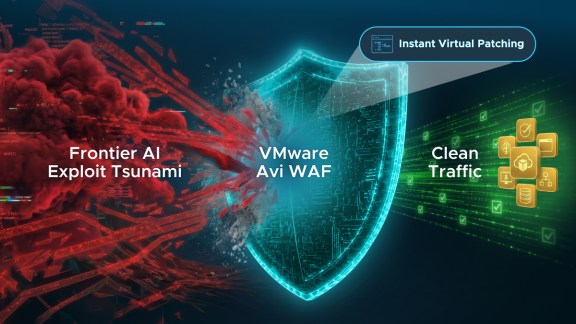
Cyber attacks are unrelenting. The landscape of web security is undergoing a massive shift. Public Certificate Authorities (CAs) are moving aggressively to adopt the SC-081v3 standard, designed to drastically reduce certificate validity periods and limit the blast radius of compromised keys. For enterprise IT teams, the renewal runway is becoming critically short.
As of March 2026, the maximum validity period has already dropped to 200 days. This timeline only accelerates from here: maximum validity drops to 100 days in March 2027, and plummets to a mere 47 days by March 2029. Relying on legacy certificate management processes in this new reality is a recipe for application outages.
The Imperative for Certificate Automation
The reliance on manual and static maintenance windows for SSL/TLS certificate lifecycle management is no longer a viable strategy for the modern enterprise especially given the urgency of shortened validity period. These legacy methodologies are inherently slow and susceptible to human errors, often leading to significant operational disruptions.
In high-scale environments encompassing thousands of application workloads, automated certificate orchestration has become a must-have. While organizations have automated certificates at workload level, managing these certificates on the load balancers remains a major challenge. VMware Avi Load Balancer (Avi) integrates with VMware Cloud Foundation (VCF) to automate certificate management to ensure renewals and updates are executed seamlessly. This minimizes downtime risk and enables rapid certificate expiration detection and timely certificate refresh cycle.
The Avi Advantage
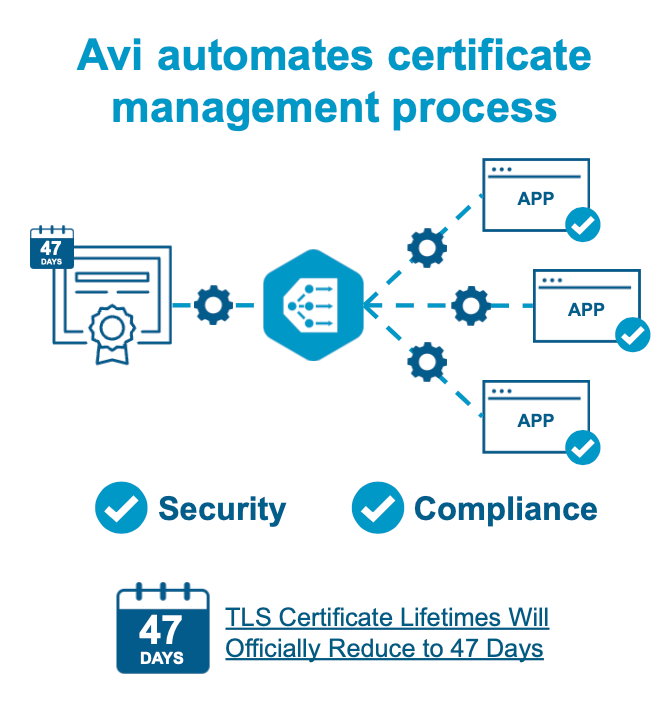
Avi transforms how enterprises handle cryptographic identities by completely automating the certificate management process. Implementing this automation delivers three critical business benefits:
- No Expired Cert Outages: Avi automatically tracks, renews, and deploys SSL/TLS certificates across all virtual services before they expire, ensuring uninterrupted service availability.
- No Additional Licenses Required:: Avi’s certificate management is in-built, removing the cost and complexity of third-party tools by automating the full certificate lifecycle natively within the platform.
- Operational Efficiency: Automation permanently eliminates the toil of manual certificate tracking, Certificate Signing Request (CSR) generation, and pushing certificates across distributed applications.
Avi Certificate Management on VCF
Avi’s software-defined architecture is designed to simplify and centralize complex security operations, offering automated certificate management, especially within the VCF environment. Because Avi integrates with VCF, it allows administrators to automate the provisioning, enforcement, and lifecycle management of security services across their workload domains. This deep integration means that SSL/TLS certificates, web application firewall (WAF) policies, and cryptographic standards can be centrally managed and dynamically applied to applications as they scale. Consequently, IT teams benefit from automated certificate renewals, centralized visibility into secure traffic flows, and a significantly reduced risk of outages or compliance violations within their software-defined data center.
Avi’s automated certificate management is characterized by three key capabilities:
- CA Integrations: Avi natively supports a wide range of Private and Public CAs, including Let’s Encrypt, Sectigo, and others via the ACME protocol, ensuring compatibility with your existing security infrastructure.
- Automated Lifecycle: The platform guarantees end-to-end automation for certificate issuance, renewal, and deployment. This is achieved directly on the application layer with zero downtime, critical for maintaining high availability in VCF deployments.
- Centralized Management: Administrators benefit from a single, unified control plane (the Avi Controller) for comprehensive visibility and management of all application certificates. This approach is particularly powerful for managing certificates across VCF and other disparate environments, ensuring consistent policy enforcement and streamlined operations across your entire infrastructure.
Robust Certificate Management Capabilities
To support diverse enterprise requirements, Avi includes a comprehensive suite of certificate lifecycle capabilities out-of-the-box. Key Avi capabilities include:
- CSR Automation with dynamic parameters: Implement automated Certificate Signing Request (CSR) generation where parameters like domain names and organizational details are dynamically sourced, reducing manual effort and errors.
- Third-Party Certificate Imports: Streamline the process of importing certificates issued by external CAs into the internal infrastructure.
- Automated Lifecycle Management: Ensure all certificates are automatically renewed, revoked, and provisioned according to their defined lifecycle policies without human intervention.
- Custom Renewal Scripts: Flexibility to create custom renewal scripts for different CAs and specific environments.
- Automated Certificate Chaining: Automatically assemble and manage the full trust chain for each certificate, ensuring proper installation and browser compatibility.
- Certificate Management Scripts: Currently utilizing scripts integrated with popular certificate providers and management platforms to handle various certificate operations.
Avi Certificate Management Workflow
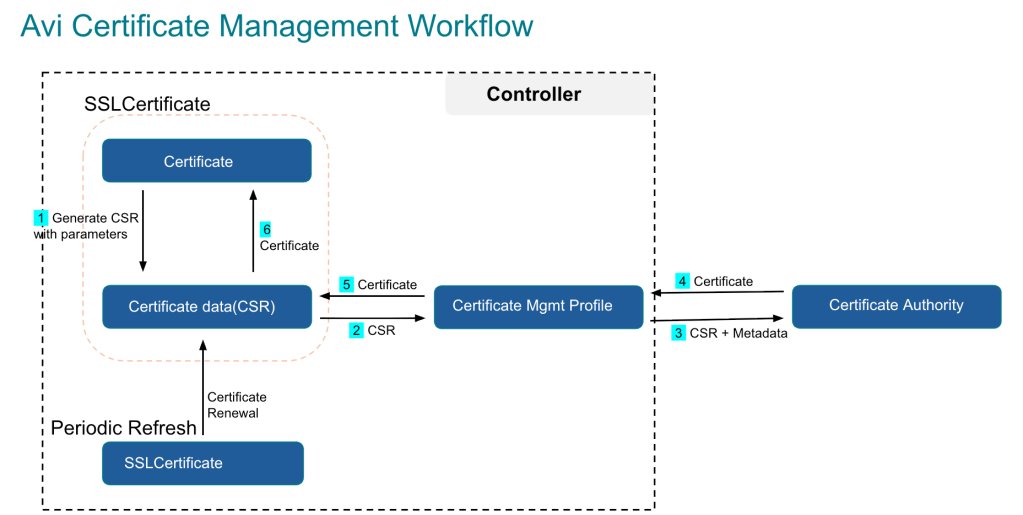
Avi streamlines the workflows in six easy steps:
1. Generate CSR with Parameters
The process begins inside the SSLCertificate object on the Avi Controller. The user (or a scheduled refresh) triggers the generation of a Certificate Signing Request (CSR) using defined parameters like Common Name (CN), Subject Alternative Name (SAN), and key size.
2. Pass CSR to Certificate Management Profile
The generated CSR data is then handed off to the Certificate Mgmt Profile. This profile contains the specific logic and credentials needed to communicate with your chosen external Certificate Authority (CA).
3. Submit CSR + Metadata to Certificate Authority
The Certificate Management Profile acts as the gateway, sending the CSR along with any required metadata (such as API keys or authentication tokens) across the network to the external Certificate Authority.
4. Receive Certificate from CA
The Certificate Authority processes the request, validates the identity, signs the certificate, and sends the signed Certificate back to the Avi Controller’s Management Profile.
5. Return Certificate to SSL Object
The Certificate Management Profile receives the signed file and passes the Certificate back to the internal Certificate data (CSR) placeholder. This effectively completes the handshake between the external entity and the internal Avi object.
6. Update SSLCertificate
In the final step, the Certificate is officially tied back to the SSLCertificate parent object. This replaces the old or pending certificate data with the new, valid certificate, making it ready for use by Virtual Services.
As the industry accelerates toward shorter certificate lifespans, adopting an automated, centralized approach is the only sustainable path forward. By leveraging Avi on VCF, enterprises can eliminate the risk of expiration outages, streamline operational workflows, and future-proof their application delivery infrastructure.
Here is a demo on How to Automate Certificate Management with VMware Avi Load Balancer.