
Server memory prices have surged over the past year, with some DRAM modules rising as much as 60% in a single month and no meaningful relief until 20271 and prices for server vendors are under even more pressure as lead times stretch from weeks to months2. Glencore, one of the world’s largest diversified natural resource companies, responded by deploying NVMe memory tiering, a standard capability in VMware Cloud Foundation (VCF), across its global infrastructure. The feature pairs DRAM with high-capacity NVMe solid-state drives in a single memory pool, and it has already doubled available memory in key Glencore environments without a matching rise in DRAM spend. It’s running in production today, and the business case gets stronger every time memory prices climb.
A global operation feeling the squeeze
Glencore produces and markets more than 60 commodities across 70 vCenters and roughly 50 locations worldwide. When a server procurement quote more than tripled in price in a matter of months, the infrastructure team got direct confirmation that DRAM-only provisioning was becoming financially untenable. A metro cluster resilience requirement at the Baar, Switzerland headquarters compounded the problem by capping usable DRAM at 50% of any host’s capacity (see the full case study for the metro cluster details).
How NVMe memory tiering works
VCF combines fast DRAM (Tier 0) with NVMe solid-state drives (Tier 1) into one memory pool, keeping hot data on DRAM and shifting cold data to NVMe automatically. A 1.6-terabyte NVMe drive costs roughly what 64 gigabytes of DRAM costs, so Glencore’s standard 1:1 DRAM-to-NVMe configuration doubles total memory for a fraction of the price. Broadcom’s own VCF 9.0 performance testing backs this up: a performance cost below 10% across enterprise benchmarks, up to double virtual machine density, and total cost of ownership savings of up to 40%. The full case study walks through Glencore’s own cost math in more depth.
From careful test to standard practice
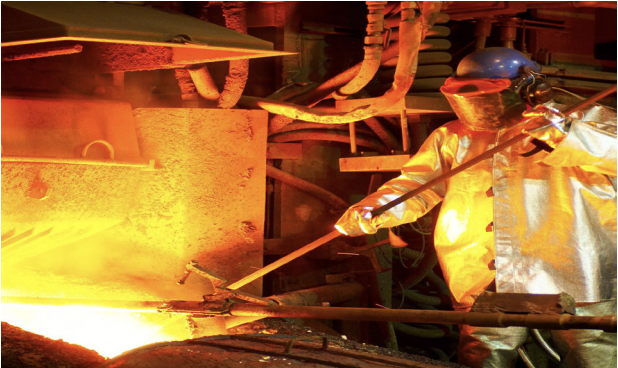
Figure 1: Glencore mining operations
Glencore didn’t rush this. The team tested memory tiering on vSphere 8 first, then moved to the latest VCF release, where it became a single cluster configuration setting instead of a manual process. A multi-site evaluation spanning Brisbane, Sydney, and Baar preceded production, and the team retired its test environments once VCF 9.1 early access became available. The result: every new Cisco UCS server Glencore deploys now ships with an NVMe card built in. The case study covers the evaluation path step by step.
Results: more memory, lower costs, no developer complaints
Today, 50% of Glencore’s Linux developer VDI systems run on VCF NVMe memory tiering in production, with roughly 5% of all workloads in the Baar cluster using it so far, an early-stage number, not a ceiling. Standard VDI builds reserve 48 to 96 gigabytes of RAM per desktop even though utilization typically runs 10% to 15%, which is exactly the gap NVMe tiering closes without the matching DRAM outlay. Glencore is now extending the capability beyond VDI into business applications and databases. See the full case study for the complete workload breakdown.
Why this matters for infrastructure budgets right now
This isn’t a one-year pricing blip. TrendForce and Counterpoint Research both expect DRAM contract prices to climb 80-95% quarter-over-quarter into 2026 as AI data center demand keeps competing with enterprise IT for the same memory supply. Glencore’s approach, a disciplined evaluation, a staged rollout, and a hardware standard that compounds savings with every refresh, offers a template for any infrastructure team watching memory eat a growing share of its budget.
Learn more about this case study and Broadcom products:
References:
- Corewave Labs. ”Why RAM and SSD prices are still rising in 2026”, Oct 31, 2026
- iFeelTech. “Why RAM prices are going up in 2026 (and what it means for Business Computers and Servers””, July 9, 2026
Discover more from VMware Cloud Foundation (VCF) Blog
Subscribe to get the latest posts sent to your email.