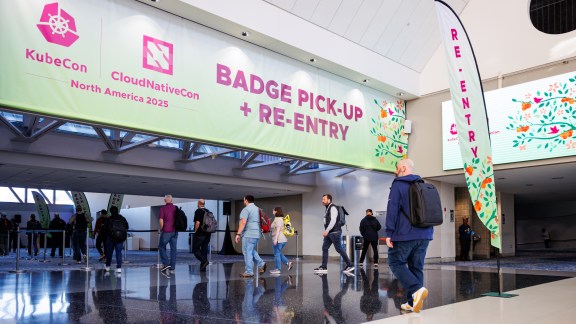

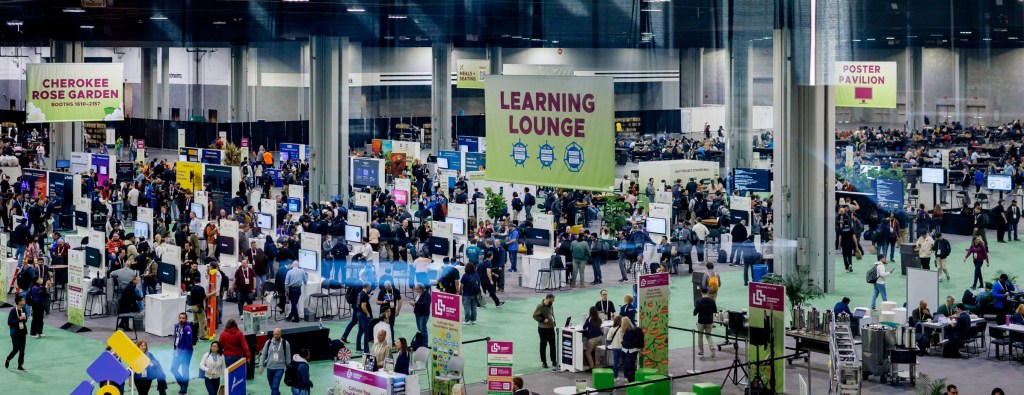
KubeCon + CloudNativeCon North America once again brought together thousands of developers, maintainers, operators, and end users from across the cloud native ecosystem. More than 9,000 attendees gathered in Atlanta, with nearly half joining for the first time, reflecting the accelerating global adoption of Kubernetes and open source innovation.
For Broadcom, KubeCon is where we connect directly with the community that has shaped Kubernetes from its earliest days. It’s where we learn, share, and collaborate on the technologies that define modern cloud infrastructure. Here are the major themes that stood out this year and how we are helping customers take advantage of what’s next.
Cloud Native and AI Continue to Advance Together
A clear message emerged among a number of the keynotes and technical sessions: The future of AI is cloud native, and the future of cloud native is AI.
Whether it was Adobe’s “Maximum Acceleration” keynote, Niantic’s real-time ML workflows, or Cohere’s enterprise AI architecture, it became evident that Kubernetes has become the foundation for training, serving, and governing AI models.
These were some of the main takeaways:
- Inference is still the dominant enterprise AI workload, projected to drive hundreds of billions in investment over the next decade
- AI workloads need portability and interoperability across data centers and public clouds
- DRA (Dynamic Resource Allocation) is now the standard Kubernetes API for orchestrating accelerators and other specialized resources including GPUs, networking interfaces, and fine-grained CPI sharing. This is now GA in Kubernetes v1.34
- Multi-cluster and multi-cloud operations are becoming standard patterns
For more than two decades, we have engineered the operational foundations now required for large-scale AI: predictable scheduling, isolation boundaries, memory and CPU efficiency, and robust lifecycle automation. These strengths directly support the direction Kubernetes is heading.
Our upstream work, including etcd improvements, leadership on long-term lifecycle stability, conformance engagement, and contributions across SIGs ensures our platforms adopt these emerging AI-native standards in a way enterprises can trust.
VKS: Certified Kubernetes AI Conformant
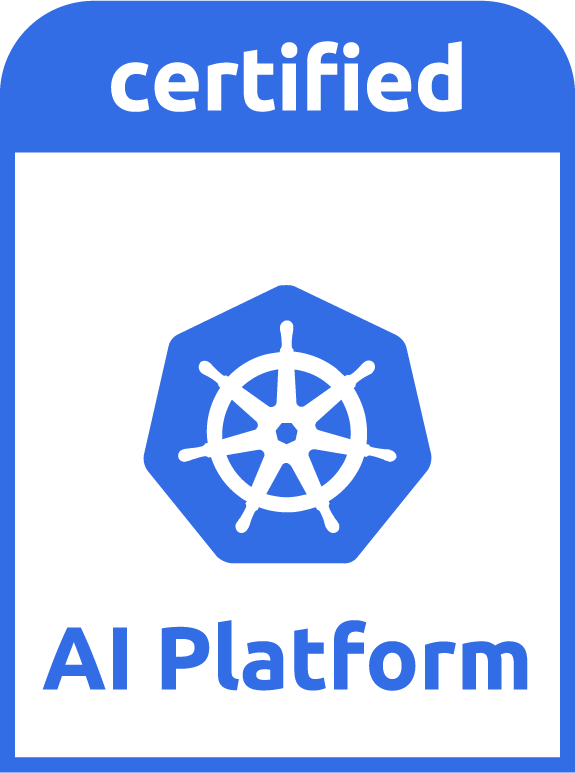
This year, the CNCF formally launched Kubernetes AI Conformance, validating the essential set of capabilities required for portable and interoperable AI workloads.
We’re proud that VMware vSphere Kubernetes Service (VKS) was recognized as among the first AI-conformant platforms, ensuring:
- Reproducible and observable AI workload execution
- GPU orchestration aligned with DRA
- Consistent behavior across clouds and on-premises
- A foundation for enterprise governance and security
This recognition reflects our long-standing support of open, community-driven standards, building on years of maintaining fully certified Kubernetes services—not only at the Kubernetes API layer, but across the broader infrastructure stack, from compute to networking. We look forward to continued collaboration as AI workloads and conformance requirements evolve.
Supply Chain Security and Identity Are Top Priorities
Security was a dominant cross-day theme. Multiple keynotes emphasized one simple, sobering reality: if your build image is compromised, nothing else in your environment is safe.
Key discussions included:
- End-to-end attestation, signing, and verification are becoming mandatory
- OSTIF’s 2025 Kubernetes security audit identifying hardcoded credentials in commonly used images
- OpenFGA and the rise of relationship-based access control (ReBAC) for modern application authorization
- The growing role of SBOMs and compliance frameworks, including the EU Cyber Resilience Act
Our security model has always centered around strong isolation boundaries, controlled lifecycle operations, and secure policy-driven infrastructure. Technologies such as Harbor which have signed and attested artifacts give our customers a hardened private-cloud foundation aligned with modern supply chain expectations.
Platform Engineering Is Becoming a Repeatable Discipline
There was a buzz around Abby Bangser’s keynote on optimized platform engineering which resonated across the event. The community is converging on a shared understanding of what effective platforms look like:
- API-first self-service
- Full lifecycle business compliance
- Fleet-level management and consistency
Many organizations like Airbnb, Mailchimp/Intuit, Apple, and Bloomberg all reinforced the same message: teams succeed when they stop “catching up” and start building consistent paved roads for developers.
A major enabler of these modern platforms is OpenTelemetry, which emerged repeatedly as a cornerstone of operational maturity. Organizations like Airbnb showcased how unified, vendor-neutral telemetry pipelines dramatically improved debugging, performance visibility, and developer experience across thousands of services. OpenTelemetry is quickly becoming the standard for consistent observability across complex, multi-cluster environments.
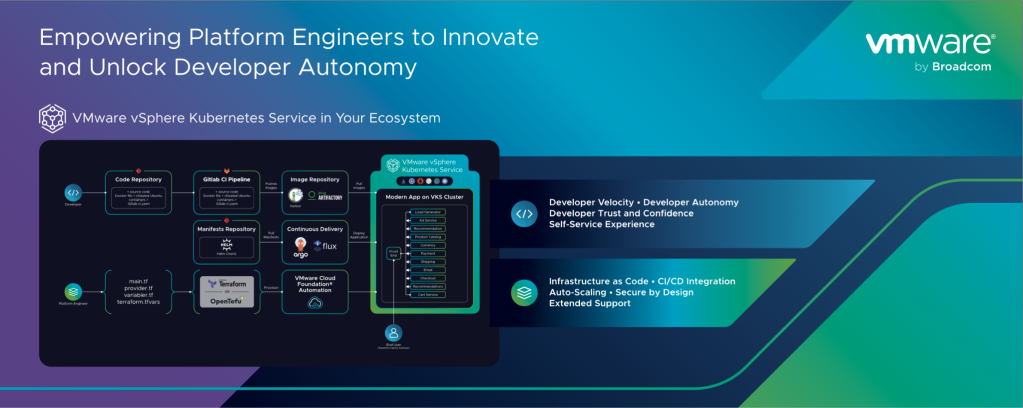
The trends highlighted at KubeCon reflect the same challenges enterprises face every day: delivering consistent operations across teams, simplifying lifecycle management, maintaining secure boundaries, and observing everything running across distributed environments. This is exactly the type of operational model that VMware Cloud Foundation (VCF) and VKS are designed to support.
By combining:
- Governed, API-driven cluster lifecycle operations
- Strong multitenancy and isolation
- Secure, consistent operations across environments
- An observability roadmap aligned with OpenTelemetry and open standards
- Out-of-the-box GitOps workflows, such as GitHub-based configuration and environment management, to ensure repeatability at scale
- Kubernetes-native operations on ESX VMs, offering the best of both worlds: modern workflow automation with the performance and isolation of virtualized infrastructure
VCF and VKS give platform teams a reliable way to build the “paved roads” that modern organizations increasingly depend on.
AI Networking, Compute, and Storage Are Converging
AI workloads are pushing infrastructure to its limits—not just GPUs, but the entire compute and networking stack. The Kubernetes Network Driver keynote highlighted how HPC, Telco, and AI are converging around:
- DRA as the unified orchestration model
- RDMA networking
- High-bandwidth GPU fabrics
- Topology-aware scheduling
- Multi-NIC and multinetwork support
VCF’s integrated compute + network architecture (vSphere + NSX) is uniquely positioned to support next-generation AI networking requirements at enterprise scale without sacrificing security or governance.
Sessions, Demos, and Industry Engagement
Sessions
Our engineers and product leaders contributed across multiple tracks at KubeCon, helping drive core advancements in the Kubernetes ecosystem:
- TAG Workloads Foundation – defining standards for workload execution and lifecycle
- TAG Operational Resilience – defining operational standards for health and resilience of the cloud native ecosystem
- Kubernetes SIG Contributor Experience – maintaining a healthy and productive state of Kubernetes projects
- Kubernetes Long-Term Support (LTS) – contributing enterprise lifecycle expertise that shaped release cadence direction, emulation-version design, and containerd LTS alignment
- etcd resiliency and roadmap – improving reliability for the data store powering every Kubernetes cluster
- gRPC ecosystem evolution – modernizing high-performance communication across microservices
- Kubernetes SIG Storage updates – strengthening enterprise-grade data capabilities
We also hosted a demo theater session focused on practical guidance for running and recovering etcd at scale, helping operators improve cluster stability with confidence. We’re grateful to every contributor, reviewer, and community member who joined the conversation.
Our Upstream Contributions: Strengthening Kubernetes for Everyone
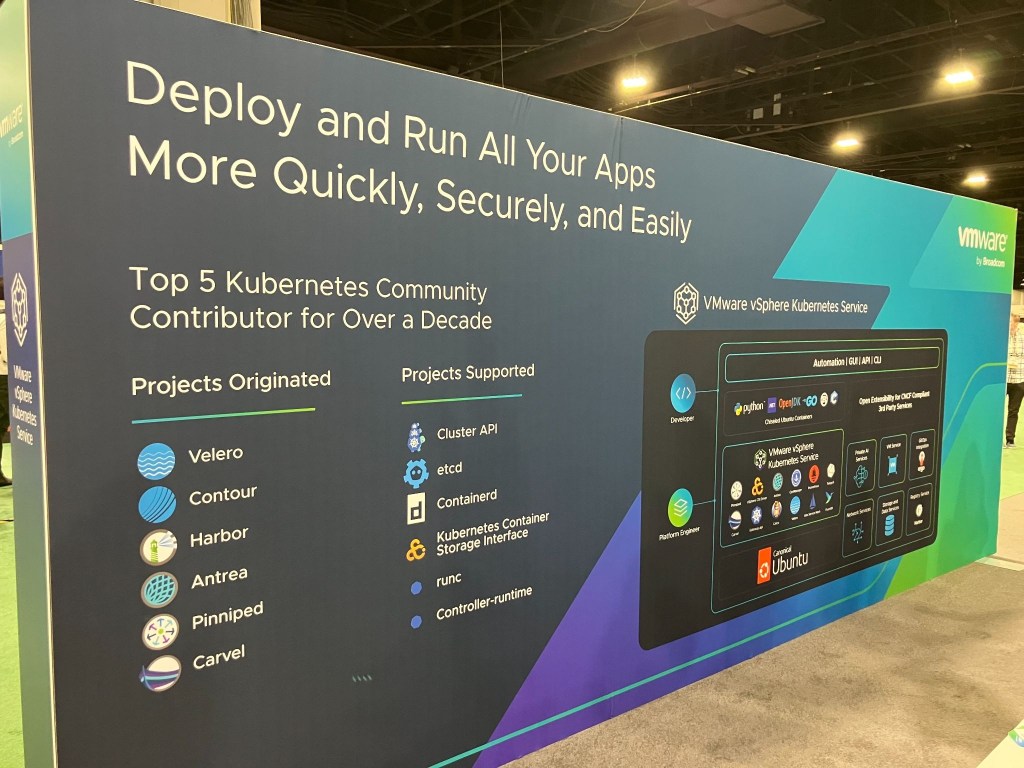
Beyond sessions, we contributed tangible upstream improvements that benefit both operators and the broader Kubernetes ecosystem in terms of Kubernetes LTS leadership, Lifecycle and upgrade expertise, and etcd tooling contributions:
- We helped bootstrap the original LTS initiative in 2018, influenced the move from a four-release cadence to three, provided technical input into multi-version compatibility and “emulated version” design, and helped shape the long-term support strategy for containerd as active stakeholders and maintainers.
- Our real-world operational experience informed the current LTS Working Group’s direction, particularly around safe, predictable cluster upgrades—one of the community’s top priorities for enterprise adoption.
- Our engineers drove upstream improvements such as etcd-diagnosis (automated cluster health analysis) and etcd-recovery (guided restoration for degraded control planes), designed to reduce downtime and simplify troubleshooting for operators everywhere.
These are examples of how we continue to support upstream Kubernetes not just through participation, but through meaningful work that strengthens the reliability, operability, and predictability of the platform.
Sharing Practical Expertise: Demos and Technical Deep Dives
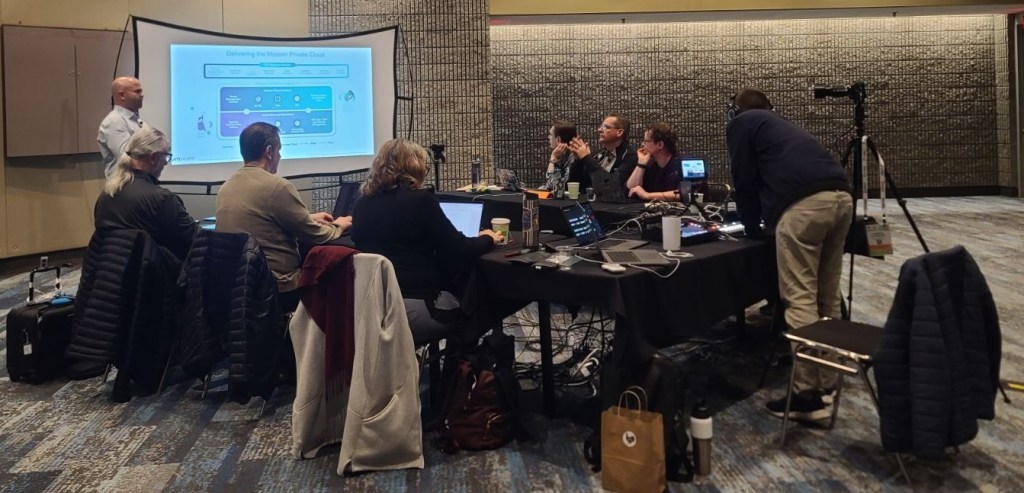
Finally, the team participated in a Tech Field Day with Futurum, now available on YouTube, showcasing the power and simplicity of vSphere Kubernetes Service (VKS):
- Platform Engineering Enablement – Fully conformant Kubernetes runtime, simplified lifecycle operations, and built-in guardrails
- Faster App Delivery – Automated cluster provisioning, GitOps workflows with Argo CD, and integrated observability
- Private Cloud Advantage – Stronger governance, efficiency, and synergy with VCF services
Looking Ahead
KubeCon North America 2025 made one thing clear: The cloud native ecosystem is rapidly evolving into an AI-native ecosystem.
From standardized GPU orchestration to distributed inference, platform engineering maturity, and secure supply-chain practices, the CNCF community is pushing forward fast. We are excited to help accelerate this evolution.
Thank you to everyone who contributed, presented, attended, or stopped by our sessions and demos!
See you at KubeCon Europe 2026.
Discover more from VMware Cloud Foundation (VCF) Blog
Subscribe to get the latest posts sent to your email.